Black Polyimide Film for EV Battery Insulation: Properties, Benefits and Applications
What Is Black Polyimide Film?
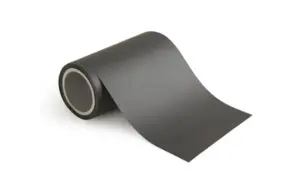
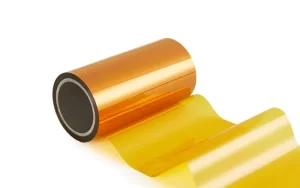
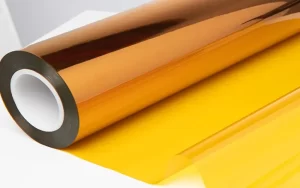
Black polyimide film is a specialized type of polyimide film designed for applications that require electrical insulation, heat resistance, dimensional stability, and light shielding. It combines the inherent properties of polyimide with a black, low-gloss surface.
Polyimide materials are widely considered for electrical and electronic applications because they can provide insulation while maintaining stable physical properties under demanding conditions. Black polyimide film adds another functional advantage through its dark appearance and shielding capability.
For flexible circuit boards and electronic components, the black surface can help make precise circuit structures less visually apparent. Its low-gloss characteristic can also help reduce glare during visual inspection.
Why Is Black Polyimide Film Used for EV Battery Insulation?
EV battery systems contain numerous electrical connections and components that require reliable insulation. Insulating materials need to separate conductive areas while maintaining their physical and electrical properties during operation.
Black polyimide film can be considered for these applications because of its combination of electrical insulation, thermal stability, mechanical strength, and dimensional stability.
For battery-related applications, the choice of an insulation film should not be based on color alone. Buyers should evaluate electrical properties, operating temperature, thickness, mechanical performance, and dimensional stability according to the specific battery component and assembly requirements.
Key Properties of Black Polyimide Film
Thermal Stability and Heat Resistance
Thermal performance is an important consideration when selecting an electrical insulation film for automotive and electronic applications. Polyimide film is commonly selected where insulation materials need to maintain stable properties under elevated temperatures.
For EV battery applications, thermal stability can be particularly important because insulation materials may be exposed to temperature changes during operation.
Electrical Insulation Performance
Electrical insulation is one of the primary functions of polyimide film. Important parameters include volume resistivity, surface resistivity, and dielectric strength or electrical operating intensity.
A suitable film should provide sufficient insulation for the intended voltage and electrical environment. Buyers should compare tested material data with the actual requirements of their application rather than selecting a film based only on its nominal thickness.
Mechanical Strength and Dimensional Stability
Insulation films may need to withstand handling, assembly, bending, or other mechanical stresses depending on the application.
Tensile strength and elongation are therefore useful parameters when evaluating black polyimide film. Dimensional stability is also important because excessive shrinkage or dimensional changes can affect the position and coverage of an insulating layer.
Low Gloss and Light Shielding
A distinctive feature of black polyimide is its low-gloss black surface. In applications involving flexible circuit boards, the black material can provide shielding capabilities that make the underlying circuit structure less visually apparent.
Low gloss can also help reduce glare during machine vision or CCD-based inspection. This can be useful where reflections could interfere with visual recognition.
Benefits of Black Polyimide Film for EV Battery Applications
Reliable Electrical Insulation
One of the main advantages of black polyimide film is its strong electrical insulation capability. Polyimide film can help electrically isolate battery-related components and reduce the risk of unwanted electrical contact. For EV battery applications, this makes it a practical material for insulation around connection pieces and other components where electrical separation is required.
High Heat Resistance and Low Thermal Shrinkage
EV battery components can operate in environments where temperature stability is important. Black polyimide film combines the heat resistance of polyimide with low thermal shrinkage, helping the insulating layer maintain its dimensional stability when exposed to elevated temperatures.
For applications where the position and coverage of an insulation layer need to remain stable, low thermal shrinkage can be an important material advantage.
Mechanical Strength and Dimensional Stability
Mechanical strength and dimensional stability are important advantages of black polyimide film for EV battery insulation. The film needs to maintain its physical integrity and stable dimensions during battery component handling and assembly, helping the insulating layer remain in its intended position and coverage.
Black polyimide film combines tensile strength and elongation with good dimensional stability. These properties contribute to the material’s overall mechanical performance and make it suitable for battery-related insulation applications where the film needs to maintain its structure during processing and use.
Low-Gloss Surface and Shielding Capability
In addition to electrical insulation and heat resistance, black polyimide film offers a low-gloss surface and shielding capability. For battery-related components such as lithium battery connection pieces, these characteristics can provide additional surface protection while making the underlying structure less visually apparent.
Applications of Black Polyimide Film
EV Battery Insulation
Black polyimide film can be used for insulation-related applications in EV battery systems, particularly for components where electrical insulation and dimensional stability are required.
The exact film specification should be selected according to the battery structure, operating conditions, and required insulation performance.
Lithium Battery Connection Pieces
Lithium battery connection pieces are another application for black polyimide film. The film can provide electrical insulation for components where conductive connections need to be separated or protected.
Flexible Circuit Board Cover Film
Flexible circuit boards are a major application area for black polyimide film. The film can be used as a cover film while providing electrical insulation and dimensional stability.
For circuit boards where structural confidentiality is important, the black appearance and shielding capability can also make the circuit structure less visually identifiable.
Black Polyimide Tape for Electronics
Black polyimide film can be used as a base material for black insulating tape. In electronics applications, black polyimide tape may be considered where electrical insulation, heat resistance, and a low-gloss appearance are required.
Our Black Polyimide Film: TFB6051 Series and Its Advantages
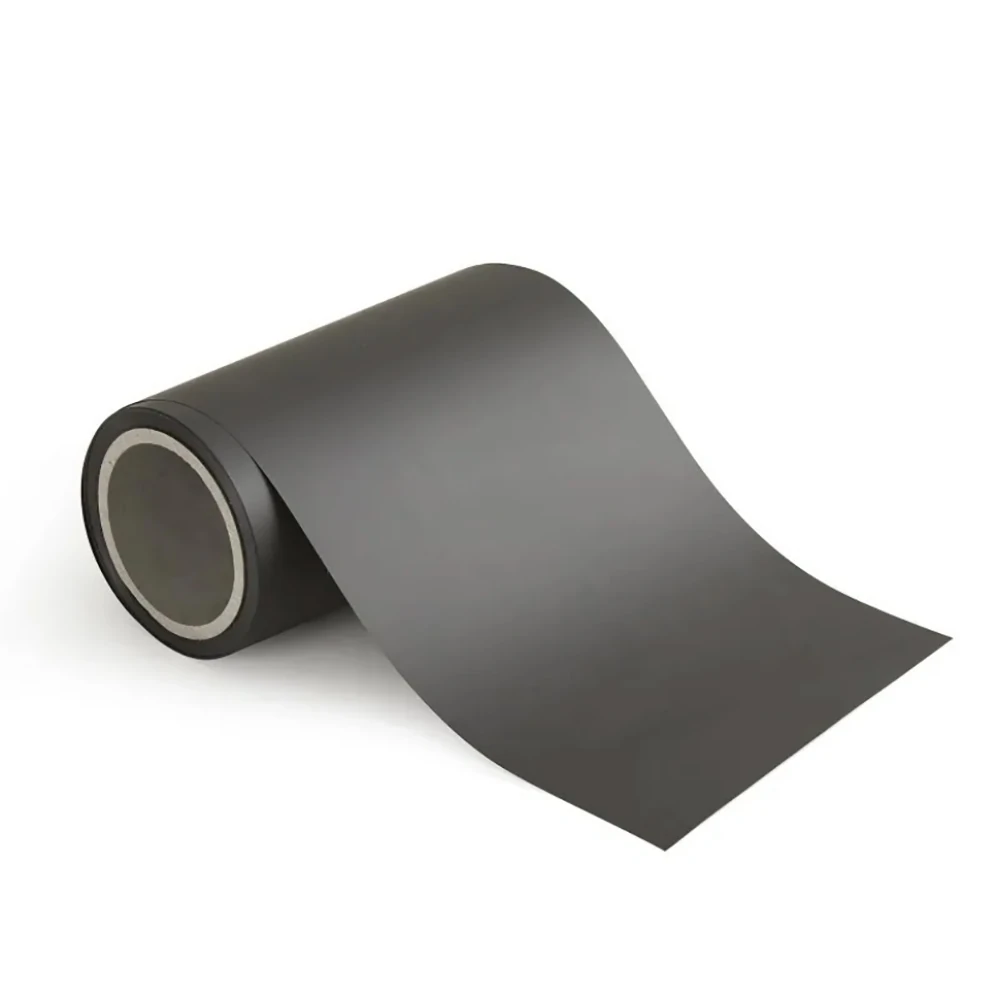
For EV battery applications where electrical insulation, heat resistance, and dimensional stability are important, our TFB6051 series provides a black polyimide film with multiple thickness options.
TFB6051 can be used for lithium battery connection pieces and other insulation-related applications. It combines the insulation properties, heat resistance, and dimensional stability of polyimide with shielding capability and a low-gloss surface.
Key Features of TFB6051 Black Polyimide Film
TFB6051 provides several properties relevant to battery insulation applications:
- Electrical insulation performance
- High heat resistance
- Dimensional stability
- Shielding capability
- Low-gloss surface
- Multiple thickness options
The film is available in 18 μm, 20 μm, 25 μm, and 50 μm thicknesses.
TFB6051 Product Specifications
| Item | Unit | TFB6051#18 | TFB6051#20 | TFB6051#25 | TFB6051#50 |
| Thickness | μm | 18 | 20 | 25 | 50 |
| Thickness Tolerance | μm | ±0.5 | ±0.5 | ±0.5 | ±0.5 |
| Tensile Strength | MPa | 170 | 175 | 180 | 185 |
| Elongation | % | 50 | 55 | 60 | 65 |
| Volume Resistivity | Ω·cm | 4.5×10¹³ | 4.5×10¹³ | 4.5×10¹³ | 4.5×10¹³ |
| Surface Resistivity | Ω | 3×10¹⁵ | 3×10¹⁵ | 3×10¹⁵ | 3×10¹⁵ |
| Electrical Operating Frequency Intensity | V/μm | 110 | 110 | 110 | 110 |
| Heat-Shrinking Rate (200°C, 2 Hr) | % | 0.1 | 0.1 | 0.1 | 0.1 |
| Glossiness | GU | 25 | 25 | 25 | 25 |
Note: The data in the table are typical values obtained from testing mass-produced products and should not be regarded as guaranteed values.
TFB6051 Performance Highlights
TFB6051 provides consistent electrical insulation performance across its four thickness options. The volume resistivity is 4.5×10¹³ Ω·cm, while surface resistivity reaches 3×10¹⁵ Ω. These properties make the film suitable for applications where reliable electrical insulation is required.
The available thicknesses range from 18 μm to 50 μm, giving buyers flexibility when selecting a film for different component and insulation requirements. Depending on thickness, tensile strength ranges from 170 to 185 MPa, with elongation from 50% to 65%.
TFB6051 also shows a heat-shrinking rate of 0.1% under the specified 200°C, 2-hour test condition. All four specifications have a glossiness of 25 GU, supporting the low-gloss appearance of the black film.
For buyers evaluating black polyimide film for battery-related or electrical insulation applications, these specifications provide a practical basis for comparing thickness, insulation performance, mechanical properties, and thermal stability.
FAQs About Black Polyimide Film
What Is Black Polyimide Film Used For in EV Batteries?
Black polyimide film can be used for insulation-related applications in EV batteries, including lithium battery connection pieces. It can also be used for black insulating tape and other electrical insulation applications where electrical insulation, heat resistance, and dimensional stability are required.
Can Black Polyimide Film Be Used for EV Battery Insulation?
Yes. Black polyimide film can be considered for EV battery insulation and lithium battery-related components where electrical insulation and dimensional stability are required. The appropriate specification should be selected according to the actual application requirements.
What Is the Difference Between Black Polyimide Film and Black Polyimide Tape?
Black polyimide film is the film material itself, while black polyimide tape is a finished tape product that can use black polyimide film as its base material. The final tape structure depends on the specific product design.
Conclusion
Black polyimide film is a specialized insulation material that combines electrical insulation, heat resistance, mechanical strength, dimensional stability, and low-gloss shielding characteristics.
For EV batteries and electronics, buyers should consider film thickness, electrical properties, thermal performance, mechanical strength, and dimensional stability when selecting a material.
Our TFB6051 black polyimide film is available in 18 μm, 20 μm, 25 μm, and 50 μm thicknesses, with applications including flexible circuit board cover film, black insulating tape, and lithium battery connection pieces. Its specific performance data can help B2B buyers compare available specifications according to their application requirements. If you are comparing black polyimide film for EV battery or electronics applications, contact us to discuss your requirements and select the appropriate TFB6051 specification.