How to Choose Polyimide Film Laminated with NOMEX Paper for Electrical Insulation
Key Takeaways
- Polyimide film laminated with NOMEX paper combines electrical insulation, heat resistance, mechanical strength, and flexibility.
- Key properties to evaluate include dielectric strength, resistivity, heat resistance, mechanical strength, dielectric characteristics, and heat contraction.
- Material selection should be based on the specific insulation application, operating conditions, available space, and processing requirements.
- TF6051-DK uses one layer of NOMEX paper and one layer of polyimide film and is available in a standard 0.08 mm thickness with a Class H heat-resistant grade.
Introduction
Electrical insulation materials used in motors, transformers, generators, and other electrical equipment must maintain reliable performance under the conditions they encounter during operation, including electrical loads, elevated temperatures, and mechanical stress. Choosing the right polyimide film therefore starts with understanding the requirements of the specific insulation application.
Polyimide film laminated with NOMEX paper is a composite insulation material that combines the characteristics of both materials in a single structure. But how do you determine whether this type of insulation material is suitable for a particular application? This guide explains its basic structure, the key properties to consider, and the factors that should be evaluated when selecting a material, followed by a closer look at the specifications and applications of TF6051-DK.
What Is Polyimide Film Laminated with NOMEX Paper?
Polyimide film laminated with NOMEX paper is a composite electrical insulation material that combines a polyimide film layer with NOMEX paper. The two materials provide complementary characteristics for electrical insulation applications.
What Is Polyimide Film?
Polyimide film is a thin film material used for electrical insulation where dielectric performance and thermal resistance are important. Its properties make it suitable for insulation systems exposed to demanding electrical and thermal conditions.
Properties such as electrical strength, resistivity, heat resistance, mechanical strength, and dielectric characteristics are important when determining whether a particular film is suitable for an application.
What Is NOMEX Paper?
NOMEX paper is used as one component of the composite insulation structure. When combined with polyimide film, it contributes to the overall mechanical properties and flexibility of the insulation material.
What Are the Benefits of This Composite Insulation Material?
The main benefit of combining the two materials is that the resulting electrical insulation film provides a balance of electrical, thermal, and mechanical properties.
The material can help reduce the thickness of groove insulation and increase the groove fill rate. It also has low dielectric loss, excellent high-temperature characteristics, and good compatibility with varnish.
What Properties Matter in Electrical Insulation Film?
Dielectric Strength and Electrical Insulation
Dielectric strength is one of the most important properties of an electrical insulation material. It indicates the level of electric field a material can withstand before electrical breakdown occurs.
For applications where the insulation material separates conductors or electrical components, suitable dielectric strength helps maintain reliable electrical isolation. The required level depends on factors such as the operating voltage, insulation structure, and application conditions.
Heat Resistance and Thermal Stability
Temperature resistance is another important factor when selecting an insulation material. Electrical equipment can generate heat during operation, and insulation materials may need to maintain their performance under elevated temperatures.
When evaluating a high temperature resistant film, consider its long-term heat resistance and dimensional stability. The material should be selected according to the actual operating temperature and conditions of the electrical equipment.
Mechanical Strength and Flexibility
Electrical insulation materials may need to be bent, shaped, inserted, or handled during manufacturing and assembly. Mechanical strength and flexibility can therefore affect both material handling and the reliability of the finished insulation system.
Tensile strength indicates how much pulling force a material can withstand before failure, while elongation describes how much the material can stretch. A suitable balance between strength and flexibility can make an insulation film easier to process and use in different insulation structures.
Electrical Resistivity
Surface resistivity describes the resistance to electrical current flowing across a material’s surface, while volume resistivity describes resistance through the material.
High resistivity is generally important for materials used to electrically isolate components. When comparing insulation films, resistivity should be considered under conditions relevant to the intended application, including temperature and other operating factors.
Dielectric Constant and Dielectric Loss
The dielectric constant describes how a material behaves in an electric field and can affect the electrical characteristics of an insulation system. Dielectric loss indicates the amount of electrical energy dissipated within the material under an alternating electric field.
For applications involving electrical equipment, these properties should be evaluated together with operating frequency and other relevant electrical requirements.
Heat Contraction
Heat contraction describes the dimensional change that occurs when an insulation material is exposed to elevated temperatures. It is an important consideration when dimensional stability is required during thermal exposure.
How to Choose Polyimide Film for Electrical Insulation?
Once the key properties are understood, the next step is to match them with the actual requirements of the insulation application. A practical selection process should consider the application, insulation grade, available space, manufacturing process, and compatibility with other materials.
Match the Material to the Application
Start with the specific insulation application. Slot insulation, for example, may require a thin and flexible material that can fit into limited space, while inter-wire, phase, and transformer insulation may place greater emphasis on electrical and thermal performance.
Identify the primary requirements of the application first, then compare the material properties that directly affect its performance.
Determine the Required Insulation Grade
The required insulation grade should be matched to the operating conditions of the electrical equipment.
If the equipment has a defined insulation class, check the relevant temperature and performance requirements before selecting the material. This provides a more practical basis for comparing different insulation films.
Check the Available Insulation Space
Film thickness should be considered when the available insulation space is limited.
A thinner material may help make better use of a confined insulation space, but thickness should not be considered separately from electrical and mechanical performance. The selected film still needs to provide the required insulation properties for the application.
Consider Manufacturing and Installation Requirements
Consider how the film will be handled, processed, and installed. If the material needs to be bent, shaped, or fitted into a particular structure, its flexibility and mechanical properties should be suitable for the manufacturing process.
For B2B buyers, this is also a practical consideration because material that meets the technical requirements but is difficult to process may affect production efficiency.
Evaluate Compatibility with Other Insulation Materials
An insulation film may be used together with varnish or other components as part of a complete insulation system.
If varnish is involved, its compatibility with the selected film should be checked in advance. This helps ensure that the material works as part of the overall insulation system rather than being evaluated as an isolated component.
Review Technical Data Against Actual Requirements
Finally, compare the manufacturer’s technical data with the actual requirements of the equipment.
Rather than focusing on one specification, review the relevant electrical, thermal, mechanical, and dimensional properties together. A structured comparison can make it easier to identify whether a polyimide film meets the requirements of the intended electrical insulation application.
TF6051-DK Polyimide Film Laminated with NOMEX Paper
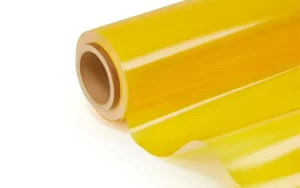
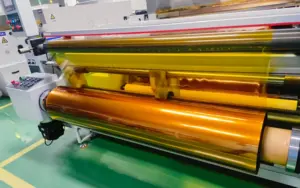
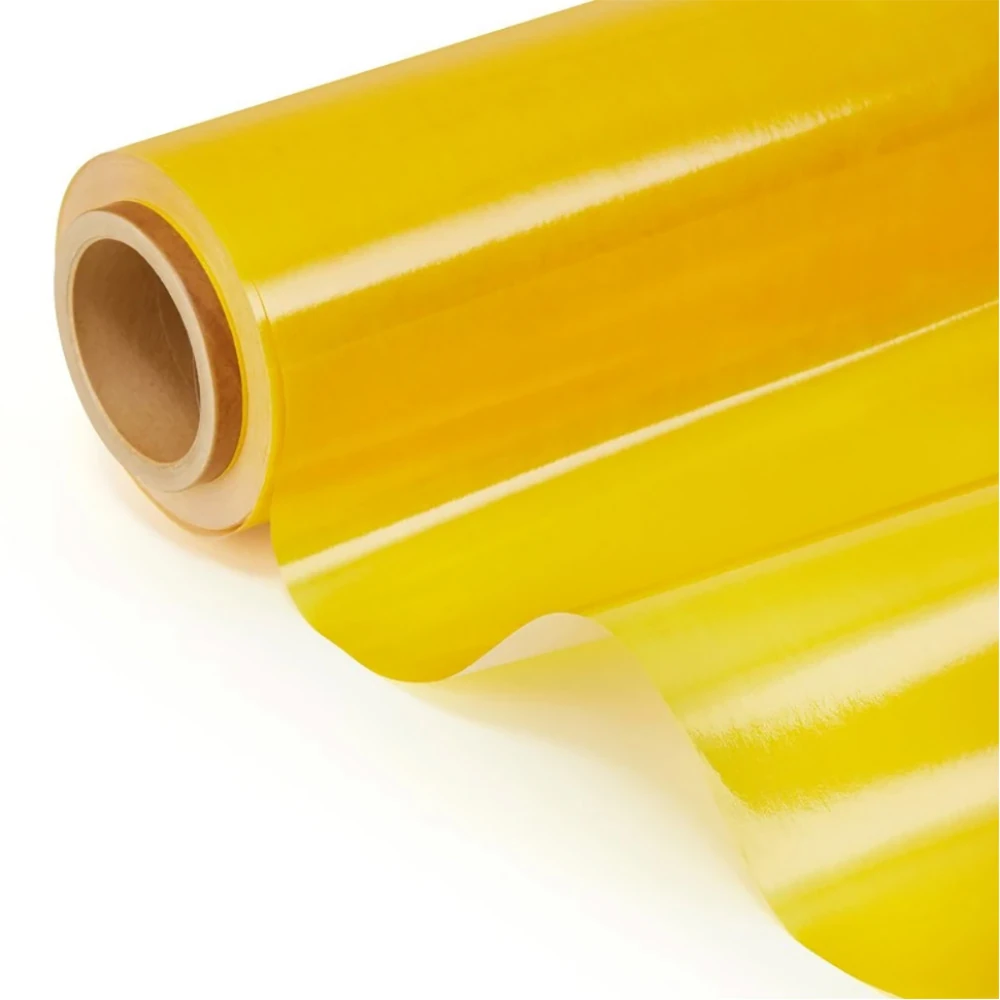
TF6051-DK is a composite insulation material consisting of one layer of NOMEX paper and one layer of polyimide film. It combines excellent dielectric performance with good mechanical properties and flexibility.
The material is designed for demanding electrical and thermal environments and has a Class H heat-resistant grade.
TF6051-DK Construction and Design
TF6051-DK uses a one-layer NOMEX paper and one-layer polyimide film structure. Its good flexibility and shape make it easy to use, while the composite structure can help reduce the thickness of groove insulation and increase the groove fill rate.
The standard product specifications provided are:
| Property | Value |
| Model / Product Code | TF6051-DK |
| Thickness | 0.08 mm |
| Width | 1000 mm |
| Length | 1500 m |
| Colour | Yellow |
| Tensile Strength MD/TD | ≥135 / ≥115 MPa |
| Elongation | ≥35% |
Electrical and Dielectric Properties
The typical electrical and dielectric properties include:
- Electrical operating frequency strength: ≥150 MV/m
- Surface resistivity at 200°C: ≥1.0 × 10¹³ Ω
- Volume resistivity at 200°C: ≥1.0 × 10¹⁰ Ω·m
- Relative dielectric constant at 48–62 Hz: 3.5 ± 0.4
- Dielectric loss factor at 48–62 Hz: ≤4.0 × 10⁻³
These values provide reference points for engineers evaluating the material for electrical insulation applications.
Thermal Properties
TF6051-DK has a long-term heat-resistance temperature index of ≥180°C. Its typical heat contraction is ≤1.0% at 150°C and ≤3.0% at 400°C, providing good dimensional stability under elevated temperatures.
These thermal properties make TF6051-DK well suited to electrical insulation applications where a high temperature polyimide film is required.
Mechanical Properties
TF6051-DK offers good mechanical strength and flexibility. Its typical tensile strength is ≥135 MPa in MD and ≥115 MPa in TD, with elongation of ≥35%.
The higher tensile strength in the MD (machine direction) indicates good resistance to pulling forces along the production direction, while the TD (transverse direction) value reflects its strength across the material width. An elongation of ≥35% indicates that the material can withstand a certain degree of stretching before breaking, supporting easier handling and shaping during insulation assembly.
Dimensions and Physical Specifications
The standard TF6051-DK specification is 0.08 mm thickness, 1000 mm width, and 1500 m length, with yellow as the specified colour.
Applications of TF6051-DK
Its stated applications include motors, electrical appliances, and dry-type transformers.
Slot Insulation for Class H Motors
TF6051-DK can be used for insulation between slots in H-class motors. Its thin structure and flexibility are suitable for applications where insulation thickness and handling are important considerations.
Inter-Wire Insulation
The material can also be used for inter-wire insulation, helping provide electrical separation within the insulation system.
Phase Insulation
TF6051-DK is suitable for phase insulation in H-class motors and electrical equipment where electrical insulation performance and thermal resistance are required.
Thermal Insulation for Electrical Appliances
It can be used for lining and thermal insulation in H-class motors and electrical appliances.
Dry-Type Transformer Insulation
TF6051-DK can also be used in dry-type transformers. Its electrical insulation, thermal characteristics, mechanical properties, and flexibility make it suitable for this stated application.
Frequently Asked Questions About Polyimide Film for Electrical Insulation
What Are the Key Polyimide Film Properties?
Important properties to consider include electrical strength, surface and volume resistivity, heat resistance, tensile strength, elongation, heat contraction, dielectric constant, and dielectric loss.
Is Polyimide Film Suitable for High-Temperature Electrical Insulation?
A specific product should be evaluated according to its technical data and intended application. TF6051-DK has a Class H heat-resistant grade and a long-term heat-resistance temperature index of ≥180°C.
What Is Polyimide Film Laminated with NOMEX Paper Used For?
TF6051-DK is specified for slot insulation, inter-wire insulation, phase insulation, lining and thermal insulation of H-class motors and electrical appliances, and dry-type transformers.
Conclusion
Choosing the right high temperature resistant film for electrical insulation requires more than looking at temperature resistance alone. Electrical strength, resistivity, dielectric properties, mechanical performance, flexibility, thickness, and application conditions should all be considered.
Polyimide film laminated with NOMEX paper provides a composite insulation structure that combines electrical insulation, thermal resistance, mechanical strength, and flexibility. TF6051-DK is a Class H material with a thickness of 0.08 mm and is specified for slot, inter-wire, and phase insulation, as well as lining and thermal insulation of H-class motors and electrical appliances and dry-type transformers. If you are considering TF6051-DK for motor, transformer, or other electrical insulation applications, contact us for detailed specifications, material information, and pricing based on your requirements.