How to Select the Right Polyimide Film for Your Project
Introduction
Faced with a wide variety of polyimide films of different grades and thicknesses on the market, making the wrong selection may lead to premature product failure, soaring costs, and even compliance issues.
This guide is designed to help you choose the right polyimide film. We will delve into the nature of polyimide films and their classification methods, as well as key factors such as temperature resistance, mechanical strength, and chemical stability. In addition, you will learn how to conduct a comprehensive evaluation of suppliers based on their qualifications, industry experience, and product data.
What Is Polyimide Film
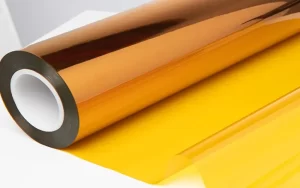
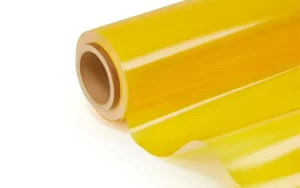
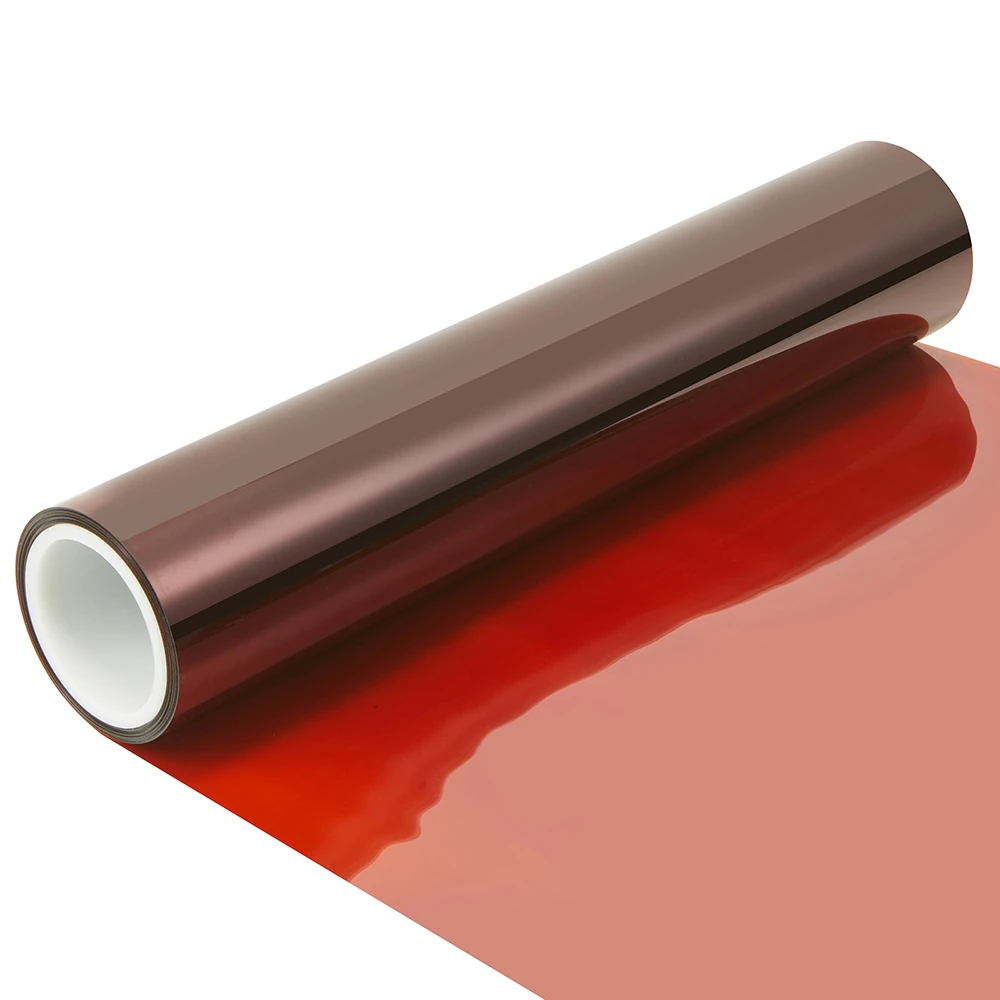
Polyimide film is a high-performance polymer. Taking our product, Model 6051, as an example: it is composed of diaminodiphenyl ether and pyromellitic dianhydride in a molar ratio of 1:2, dissolved in a dimethylacetamide solvent (with a solvent content of 70% and a solid content of 30%).
Films produced using this formula are dense and smooth, as well as resistant to heat, radiation, and corrosion. Unlike polyester or PTFE films, polyimide films do not deform or degrade, even in extreme environments.
Types of Polyimide Film
Polyimide films are mainly classified by heat resistance and strength into three types:
Standard high-temperature grade – can be used long-term above 180°C
Heat-sealable grade – can be bonded by heating
Dimensional stability grade – resists deformation when heated
Among these, HN grade has the largest market share and is widely used in FPC/PCB, motor insulation, and transformers. Our 6051 film belongs to this grade and reliably meets the demands of these industries.
Thickness, width, and surface quality also matter. We offer standard thicknesses from 25μm to 200μm, and widths can be customized.
Key Considerations When Selecting Polyimide Film
To select the right polyimide film, there are three key factors to consider: high-temperature resistance, corrosion resistance, and durability.
Temperature Resistance
Polyimide film is chosen primarily for its heat endurance. The long-term heat-resistance temperature index should be at least 180°C for H-grade applications. As a proven high temperature resistant film, our 6051 ≥180°C, meaning it can withstand continuous operation in motors, generators, and transformers without degradation.
Even at 200°C, the surface resistivity remains ≥1.0×10¹³ Ω, and volume resistivity stays ≥1.0×10¹⁰ Ω·m. This ensures reliable insulation in high-temperature environments where many other materials fail.
Chemical Resistance
During the manufacturing and usage processes, polyimide films may come into contact with solvents, oils, acids, or bases. High-quality films should exhibit excellent resistance to swelling and dissolution, as well as strong retention of mechanical strength. Our films maintain stable performance under such harsh conditions, making them an ideal choice for flexible circuits, tape processing, and cable wrapping applications.
Mechanical Properties
Mechanical strength determines how well the film handles tension, bending, and cutting. Key metrics include:
Tensile strength: Longitudinal ≥135 MPa, Transverse ≥115 MPa
Elongation at break: ≥35% in both directions
Heat shrinkage (150°C): ≤1.0% (longitudinal), ≤3.0% (transverse)
These values ensure that our film remains dimensionally stable during lamination, slitting, and die-cutting. Whether you’re using it as a slot insulation in a motor or a coverlay in an FPC, the film won’t tear or warp under normal processing conditions.
Applications of Polyimide Film
Here’s where our 6051 film fits best:
| Application | Share | Key Use |
| FPC/PCB Manufacturing | 35–40% | Coverlay, stiffener, FPC base material |
| Motor/Generator Insulation | 20–25% | Slot, phase, and turn insulation |
| Transformers & Reactors | 8–12% | Layer and end insulation |
| Wire & Cable Wrapping | 8–10% | Magnet wire and aviation cable wrap |
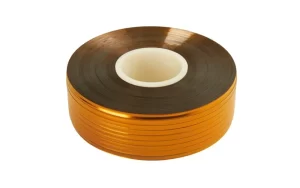
| Pressure-Sensitive Tape Conversion | 8–10% | Base film for polyimide tape |
| Consumer Electronics Die-Cutting | 5–8% | Insulation spacers, thermal barriers |
| Other Industrial Uses | 5–8% | Heater insulation, sensor substrates |
No matter your application, we can supply the right thickness, width, and roll length for your production line.
Identifying Reliable Polyimide Film Manufacturers
Not all suppliers deliver consistent quality. Here’s how to evaluate them.
Criteria for Selecting Manufacturers
To assess the reliability of a polyimide film supplier, the first step is to request key product performance data—such as temperature resistance range (≥180°C), dielectric strength (≥130 MV/m average), tensile strength (≥135 MPa longitudinal), and elongation (≥35%). Next, verify their certifications and qualifications, such as UL, RoHS, ISO9001. Finally, their years of industry experience and production scale serve as clear indicators of their supply stability.
Take ourselves as an example. We manufacture 6051 polyimide film, which complies with JB/T2726-1996. Our thickness range covers 25μm to 200μm, and we export to markets including South Korea, the United States, Japan, Germany, India, and other countries and regions. A supplier with long-term production experience and products that have passed the test of international markets is usually worth including in your evaluation.
FAQ
Q: What are the advantages of your company?
A: Our advantages include: (1) high-quality polyimide film with consistent performance; (2) responsive customer service and technical support; (3) customized solutions including thickness, width, and roll length to meet your specific needs.Q: How are the products packed?
Q: How should the product be stored and transported?
A: The products should be stored in a dry and clean warehouse upon receipt. The shelf life is approximately one year. After expiration, the product can still be used if it passes quality inspection according to the standard. Caution: avoid moisture and mechanical damage during storage and transportation.
Q: How are the products packed?
A: The film is wound onto a pipe core and supplied in rolls. Each roll is well packed and sealed with a plastic bag, then placed into a dry and clean box to ensure protection during transport.
Conclusion
In summary, selecting the appropriate polyimide film requires carefully balancing its performance characteristics against specific application requirements. Key parameters—such as dielectric strength (≥130 MV/m), elongation (≥35%), and tensile strength (≥135 MPa)—directly impact a product’s safety and usability. Taking our 6051 polyimide film as an example, it is through superior manufacturing processes and certifications (UL, RoHS, ISO9001) that the product is able to guarantee reliable performance. In addition, 6051 delivers comparable performance to premium alternatives while offering exceptional value—helping you optimize project costs without sacrificing reliability. If you are interested in our products, please feel free to contact us for a quote.