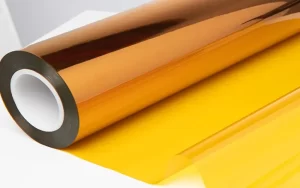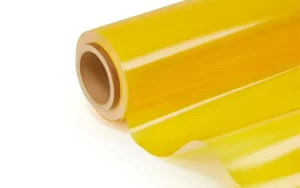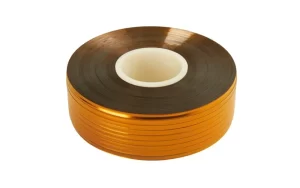
Silicone Adhesives: The Unsung Heroes Powering Modern Industries Amid 2026 Technological Leaps
April 15, 2026 — In an era defined by the pursuit of durability, efficiency, and sustainability across global manufacturing, silicone adhesives have evolved from niche bonding agents to indispensable materials, driving innovation in electronics, automotive, healthcare, and construction. As 2026 progresses, unprecedented technological breakthroughs and surging market demand are solidifying their role as foundational components in next-generation products.
Unmatched Performance: The Core Advantages of Silicone Glue
Silicone-based adhesives stand apart from traditional acrylic, rubber, or epoxy formulations due to their extraordinary versatility. Key properties include:
- Extreme Temperature Resistance: Maintaining structural integrity from -60°C to 200°C (with peaks up to 220°C), far outperforming standard adhesives.
- Superior Flexibility & Elasticity: Offering 20-680% elongation at break to absorb vibration, thermal expansion, and mechanical stress without cracking.
- Exceptional Durability: Resisting UV radiation, moisture, ozone, and chemical corrosion, ensuring decades-long performance in harsh environments.
- Electrical Insulation & Thermal Conductivity: Dual-function formulations protect sensitive electronics while efficiently dissipating heat.
- Biocompatibility: Non-toxic, odorless, and skin-safe grades certified for medical implants, wearable devices, and food-contact applications.
- Eco-Friendly Profile: Low-VOC, solvent-free, and BPA-free options align with global sustainability mandates.
2026’s Groundbreaking Innovations
This year has witnessed pivotal advancements redefining silicone adhesive capabilities:
1. Thermal Conductive Structural Adhesives for EVs
German chemical firm Wevo introduced Wevosil 28015 FL, a two-component addition-curing silicone adhesive engineered explicitly for electric vehicle (EV) batteries and power electronics. Merging 1.5 W/m·K thermal conductivity with robust structural strength (Shore A 70, 60 N/mm² modulus), it eliminates the need for separate thermal interface materials and mechanical fasteners. Fast-curing under IR/laser light achieves >2MPa initial adhesion in minutes, slashing EV assembly cycle times.
2. Self-Bonding Technology for HVAC & Manufacturing
Elkem Silicones launched BLUESIL™ ESA 8352 A&B, a room-temperature-curing self-bonding adhesive requiring no surface primers on metals, plastics, or glass. UL 94 HB certified and heat-resistant up to 180°C, it streamlines HVAC production, cuts costs, and delivers leak-proof seals with minimal maintenance.
3. 3D Printing & Soft Robotics Breakthrough
Rice University engineers developed a predictive framework optimizing silicone curing conditions to boost interlayer adhesion by 200% in 3D-printed silicone devices. This eliminates costly surface treatments, enabling stronger, more intricate soft robots, medical implants, and flexible electronics.
4. Eco-Friendly & High-Purity Formulations
Leading manufacturers accelerate the shift to zero-VOC, water-based, and “white oil-free” silicone adhesives (e.g., Guangzhou Baiyun Technology’s industry-standard line). High-purity addition-curing grades now dominate semiconductor and photovoltaic packaging, achieving 90% import substitution in China’s solar sector.
Market Surge: Driven by EVs, Electronics & Green Building
The global silicone adhesives market is projected to reach $2.47 billion in 2026 (CAGR 6.6%), fueled by:
- Electronics (35% demand): Bonding displays, sealing battery packs, and protecting semiconductors in smartphones, data centers, and 5G infrastructure.
- Automotive (17% share): EV battery assembly, autonomous driving sensor sealing, and lightweight metal-plastic bonding.
- Construction (28% market): Structural glazing in skyscrapers, weatherproofing in prefab buildings, and low-modulus sealants for green architecture.
- Healthcare: Biocompatible adhesives for wound care, wearable sensors, and surgical devices.
Asia-Pacific leads with 45% global market share, driven by China and India’s manufacturing expansion. Europe follows, propelled by strict low-VOC regulations.
The Future: Smart, Multi-Functional, and Sustainable
Industry R&D focuses on next-generation solutions:
- Smart Silicones: Integrating sensors for real-time structural health monitoring.
- Hybrid Formulations: Combining silicone with epoxy/acrylic resins for unmatched strength-adhesion balance.
- AI-Driven Production: Smart formulation systems cut development cycles from 18 to 6 months.
- Circular Economy: Recyclable and bio-based silicone adhesives reducing carbon footprints.
“Silicone adhesives are no longer just ‘glue’—they’re performance enablers,” noted a materials science analyst. “As 2026 unfolds, their ability to bond, protect, and adapt will continue underpinning the technological revolutions shaping our future.”
From EVs powering the green transition to medical devices saving lives and smart cities rising, silicone adhesives remain the quiet, reliable force holding progress together.