Biaxially Oriented Polyimide Film: A Practical Guide to Properties and Applications
Selecting a film for industrial use requires more than checking its material type. Mechanical performance, temperature exposure, electrical requirements, and dimensional tolerances can all affect whether a film is suitable for a particular application.
Biaxially oriented polyimide film is used in several industrial fields, including electronics, electrical insulation, and automotive components. Understanding its characteristics helps engineers and purchasing teams compare material specifications and make more informed decisions. This guide covers the main polyimide film properties, common uses, thickness considerations, and the specifications available for the TF6052 series.
What Is Biaxially Oriented Polyimide Film?
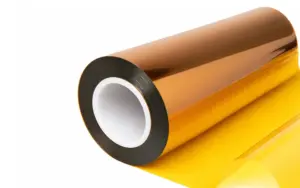
Biaxially oriented polyimide film (BOPI) is a high-performance film made through a stretching process. During production, the film is stretched in both the length and width directions to improve its mechanical strength and dimensional stability. This two-way stretching process is the main feature that distinguishes BOPI from other polyimide films, while the final properties depend on the manufacturing process and material formulation.
Key Polyimide Film Properties
The most relevant polyimide film properties depend on how the material will be used. Mechanical strength, temperature resistance, and electrical behavior are three important areas to consider during material evaluation.
Mechanical Strength and Dimensional Stability
Tensile strength and elongation are two key properties of polyimide film. Tensile strength measures how much pulling force the film can withstand before breaking, while elongation shows how much it can stretch under specified test conditions. Together, these properties help explain how the film responds to tension during processing and use.
Dimensional stability also matters in applications where the film needs to retain its shape and size. Thickness tolerance, thermal shrinkage, and linear expansion coefficient help show how consistently the film maintains its dimensions during manufacturing and temperature changes.
Polyimide Temperature Resistance
Thermal shrinkage and linear expansion coefficient help describe how polyimide film behaves when heated. Thermal shrinkage measures the percentage of dimensional reduction after exposure to a specified temperature for a set period, while the linear expansion coefficient indicates how much the film’s dimensions change with temperature. These properties are particularly relevant to applications where dimensional accuracy must be maintained during heating.
Electrical Insulation and Dielectric Properties
Electrical properties matter when a film is used for insulation or in electronic components. Volume resistivity and surface resistivity describe different aspects of a material’s resistance to electrical conduction. Electrical strength is another relevant parameter when assessing insulation requirements.
These values should be considered alongside the application’s operating conditions and testing requirements. A material specification that looks suitable in one respect may still need further evaluation against the requirements of the complete electrical system.
Common Polyimide Film Uses
Polyimide film uses span several industrial fields. The required specifications vary according to the role the film performs in the finished product.
Electronic Components and Flexible Circuits
Polyimide film is widely used in electronic components and flexible circuits for electrical insulation and circuit protection. Its thin, flexible structure makes it suitable for compact electronic assemblies and circuits that need to bend during use. In electronic manufacturing, polyimide film helps isolate conductive parts and reduce the risk of unwanted electrical contact between circuit areas.
Electrical Insulation and Pressure-Sensitive Tapes
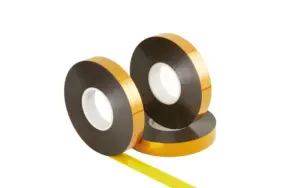
Polyimide film is used in electrical insulation materials and pressure-sensitive tapes that require heat resistance and reliable electrical insulation. In electrical applications, it helps prevent unwanted current flow between conductive parts. In pressure-sensitive tapes, the film serves as a backing material that provides insulation and supports the tape’s structure during application.
Aerospace, Automotive, and Industrial Applications
Polyimide film is used in aerospace insulation, automotive diaphragms, sensors, manifolds, and various mechanical components. In these applications, it can serve as an insulating layer or a functional material within a component. Its use across different industries reflects the need for materials that can perform reliably in demanding operating environments.
Fiber Optic Cables and Insulation Materials
Polyimide film is also used in fiber optic cables, insulation blankets, and insulation tubing. In these products, it serves as an insulating or protective material. It is also used in etching processes, where the film can provide a protective layer during manufacturing.
TF6052 Biaxially Oriented Polyimide Film Specifications
The TF6052 series offers six nominal polyimide film thickness options: 12.5 μm, 25 μm, 50 μm, 70 μm, 75 μm, and 100 μm.
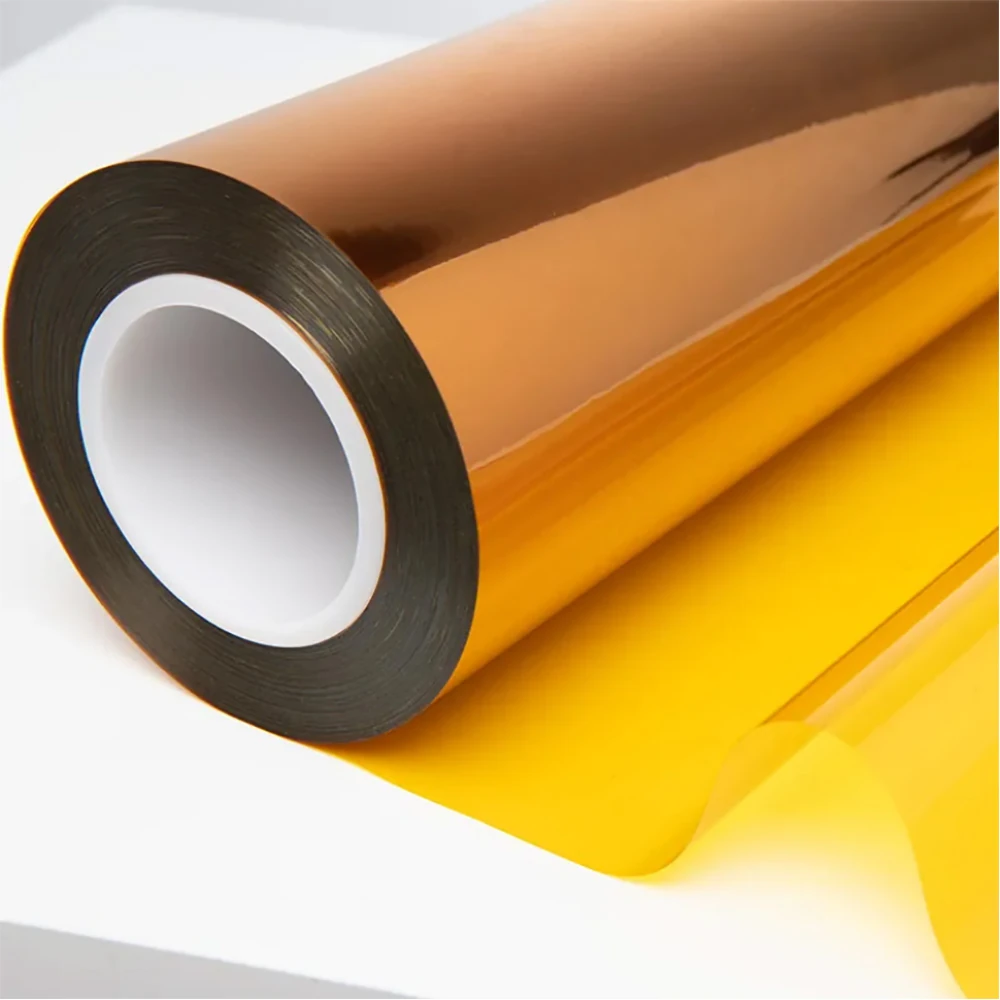
The following table summarizes the available specifications.
| Item | Unit | TF6052#12.5 | TF6052#25 | TF6052#50 | TF6052#70 | TF6052#75 | TF6052#100 |
| Thickness | μm | 12.5 | 25 | 50 | 70 | 75 | 100 |
| Thickness tolerance | μm | ±0.3 | ±1 | ±2 | ±3 | ±3 | ±3 |
| Tensile strength | MPa | 220 | 200 | 170 | 170 | 170 | 170 |
| Elongation | % | 40 | 70 | 80 | 80 | 90 | 100 |
| Electrical strength* | V/μm | 250 | 250 | 230 | 230 | 230 | 230 |
| Volume resistivity | Ω·cm | 3 × 10¹⁵ | 5 × 10¹⁵ | 2 × 10¹⁵ | 2 × 10¹⁵ | 2 × 10¹⁵ | 2 × 10¹⁵ |
| Surface resistivity | Ω | 4 × 10¹⁵ | 2 × 10¹⁵ | 2 × 10¹⁶ | 2 × 10¹⁶ | 2 × 10¹⁶ | 2 × 10¹⁶ |
| Heat shrinkage at 200°C for 2 hours | % | 0.08 | 0.08 | 0.15 | 0.25 | 0.25 | 0.25 |
| Linear expansion coefficient | ppm/K | 24 | 30 | 35 | 35 | 35 | 35 |
| Density | As supplied: kg/m³ | 1.425 | 1.425 | 1.425 | 1.425 | 1.425 | 1.425 |
Mechanical and Electrical Performance
The supplied data show that tensile strength varies by thickness. The 12.5 μm grade has a tensile strength of 220 MPa, while the 50 μm to 100 μm grades are listed at 170 MPa. Elongation ranges from 40% for the 12.5 μm grade to 100% for the 100 μm grade.
The listed electrical-strength values are 250 V/μm for the 12.5 μm and 25 μm grades, and 230 V/μm for the remaining thicknesses. Volume and surface resistivity values are also provided for each option.
These figures can support an initial technical comparison. Final selection should be based on the requirements of the intended application and confirmation of the relevant test methods and specifications.
Thermal Shrinkage and Linear Expansion
The supplied heat-shrinkage data were measured at 200°C for two hours. The 12.5 μm and 25 μm grades are listed at 0.08%, the 50 μm grade at 0.15%, and the 70 μm, 75 μm, and 100 μm grades at 0.25%.
The linear expansion coefficient ranges from 24 to 35 ppm/K across the series. These values allow buyers to compare the listed thermal characteristics of the different thickness options under the stated conditions.
Frequently Asked Questions About Polyimide Film
What Are the Main Properties of Polyimide Film?
Relevant properties include tensile strength, elongation, dimensional stability, thermal shrinkage, electrical strength, and resistivity. The priorities depend on the requirements of the intended application.
What Thicknesses Are Available for Polyimide Film?
The TF6052 series is available in six nominal thicknesses: 12.5 μm, 25 μm, 50 μm, 70 μm, 75 μm, and 100 μm. Each option has its own thickness tolerance and listed performance values.
What Are the Common Uses of Polyimide Film?
Listed applications include electronic components, flexible circuits, electrical insulation, pressure-sensitive tapes, fiber optic cables, insulation blankets, insulation tubing, automotive diaphragms, sensors, manifolds, mechanical parts, and etching-related processes.
Conclusion
Selecting biaxially oriented polyimide film requires a clear understanding of the application’s mechanical, thermal, electrical, and dimensional requirements. Comparing these factors helps engineers and purchasing teams evaluate material options using relevant technical data.
The TF6052 series offers six nominal thicknesses from 12.5 μm to 100 μm, with corresponding mechanical, electrical, and thermal measurements. Review the technical specifications and contact our team to discuss your application requirements and find a suitable film option.