Corona-Resistant vs. Standard Polyimide Film: What Is the Difference?
Polyimide film is widely used in electrical insulation because of its combination of physical, electrical, thermal, and chemical resistance. However, insulation requirements can vary significantly depending on the operating environment. In high-voltage systems where corona discharge or partial discharge may occur, resistance to these effects becomes an important consideration.
This creates a practical distinction between standard polyimide film and corona-resistant grades. While both are based on polyimide film technology, corona-resistant film is developed to better withstand the damaging effects associated with corona discharge. Understanding this difference can help engineers and purchasing teams evaluate insulation materials according to the actual requirements of their applications.
What Is Polyimide Film?
Polyimide film is a homogeneous film commonly used as an electrical insulating material. It is valued for its combination of physical, electrical, thermal, and chemical resistance, making it suitable for demanding insulation applications.
For electrical applications, material selection usually involves several factors rather than a single specification. Electrical insulation characteristics, temperature resistance, mechanical properties, and chemical resistance can all affect how a film performs within an insulation system.
Among these factors, polyimide film properties related to electrical performance are particularly relevant when the film is exposed to electrical stress. Dielectric strength, electrical resistivity, dielectric constant, and dielectric loss are commonly considered when evaluating an insulating film.
Temperature is another important factor. Polyimide temperature resistance can be relevant to electrical equipment that operates under elevated temperatures, where the dimensional stability and thermal characteristics of the insulation need to match the requirements of the system.
These properties provide the basic foundation for selecting polyimide film. However, when the insulation is exposed to corona discharge, another material characteristic needs to be considered.
What Makes Corona-Resistant Polyimide Film Different from Standard Polyimide Film?
The primary difference is resistance to the damaging effects of corona discharge.
Corona discharge is a localized electrical discharge that can occur under certain high-voltage conditions. When an insulating material is repeatedly exposed to this type of discharge, the material can experience progressive damage. For electrical systems where this exposure is possible, the ability of the insulation to resist corona becomes an additional selection criterion.
Corona-resistant polyimide film is developed specifically for this type of environment. Compared with traditional polyimide film, it provides improved resistance to the damaging effects of corona discharge while retaining the physical, electrical, thermal, and chemical characteristics typically associated with polyimide films.
When Should You Use Corona-Resistant Polyimide Film?
Corona-resistant polyimide film is intended for electrical insulation applications where the potential for corona discharge exists.
This makes corona resistance particularly relevant to high-voltage environments. Industrial motors and generators are among the applications where this type of insulation can be used. Depending on the insulation design, the film may serve as magnet wire, turn-to-turn strand, coil, slot liner, or ground insulation.
The material can also be combined with other insulation materials. For example, polyimide film can be laminated with Nomex paper or mica insulation to provide customized electrical insulation properties.
For B2B buyers, the decision should start with the actual application requirements. The expected voltage, operating temperature, insulation structure, and possibility of corona or partial discharge should be identified before requesting quotations.
This information gives manufacturers a clearer basis for recommending an appropriate film specification and helps buyers compare materials according to the requirements of the project rather than relying on a single performance parameter.
Fortune Polyimide Film CR: Built for Corona-Exposed Insulation
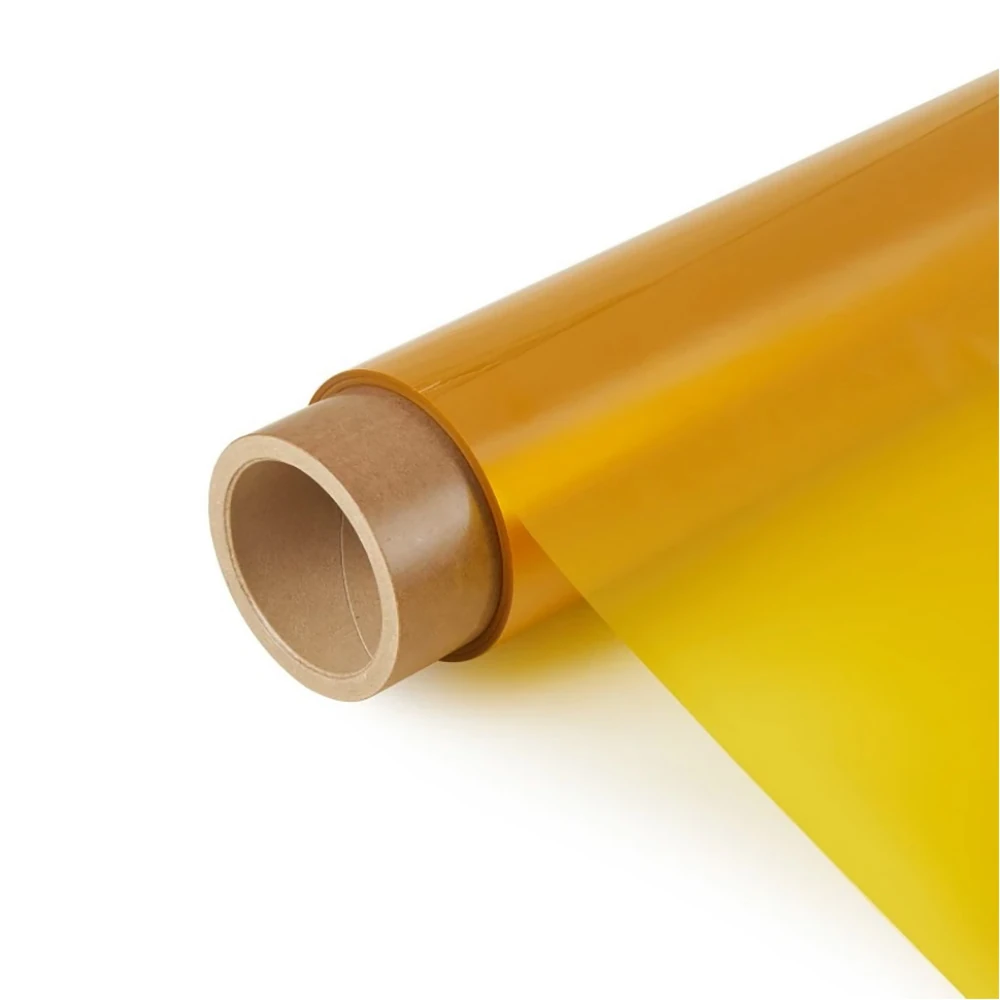
Fortune Polyimide Film CR is a homogeneous polyimide film developed for high-voltage insulation environments where corona discharge is a potential concern. Compared with traditional polyimide films, it offers improved resistance to damage caused by corona discharge while retaining the electrical, thermal, mechanical, and chemical resistance normally associated with polyimide films.
The series includes TF6254#25, TF6254#50, TF6254FCR#38, and TF6254FCRF#50, with thicknesses from 0.025 to 0.05 mm. All four grades are supplied in a width of 1000 mm and a length of 1500 m.
Key Specifications and What They Mean
All four grades have a tensile strength of ≥135 MPa in the machine direction and ≥115 MPa in the transverse direction, with elongation of ≥28%. The high tensile strength helps the film withstand pulling forces during processing and installation, reducing the risk of tearing when the material is handled or formed into an insulation structure. The elongation of ≥28% also gives the film some ability to deform under tension before breaking.
The film has a heat contraction rate of ≤1% at 200°C and ≤3% at 400°C. Lower heat contraction means less dimensional change when the film is exposed to the specified temperatures. This helps the insulation layer maintain its original dimensions as temperature rises, reducing movement or shrinkage within the insulation structure.
Polyimide electrical properties include an electrical operating frequency intensity of ≥150 MV/m, a surface resistivity of ≥1.0×10¹³ Ω at 200°C, and a volume resistivity of ≥1.0×10¹² Ω·m at 200°C. High surface and volume resistivity reduce the tendency for current to leak across the film surface or through the film itself. Maintaining these resistivity levels at 200°C is particularly relevant when the insulation is exposed to elevated temperatures.
At 48–62 Hz, the relative dielectric constant is 3.5 ± 0.4, while the dielectric loss factor is ≤4.0×10⁻³. The low dielectric loss factor means less electrical energy is lost as dielectric loss when the film operates in an AC electric field.
For Polyimide Film CR, corona-resistant life is the most application-specific specification. Under test conditions of 1 kV, 20 kHz, 90°C ± 2°C, and a pulse rise time of 400 ns, TF6254#25 and TF6254#50 have a corona-resistant life of ≥60 hours, while TF6254FCR#38 and TF6254FCRF#50 have a listed value of ≥50 hours. A longer corona-resistant life means the film can withstand corona discharge for a longer period under the specified test conditions before reaching the defined failure point. This makes the specification particularly relevant to insulation structures exposed to repeated corona discharge.
TF6254FCR#38 and TF6254FCRF#50 also have a peel strength of ≥4 N/25 mm. When the film is combined with other insulation layers, higher peel strength helps the layers remain bonded when the composite structure is subjected to mechanical forces.
| Specification | TF6254#25 | TF6254#50 | TF6254FCR#38 | TF6254FCRF#50 |
| Thickness | 0.025 mm | 0.05 mm | 0.038 mm | 0.05 mm |
| Width | 1000 mm | 1000 mm | 1000 mm | 1000 mm |
| Length | 1500 m | 1500 m | 1500 m | 1500 m |
| Tensile Strength MD/TD | ≥135/≥115 MPa | ≥135/≥115 MPa | ≥135/≥115 MPa | ≥135/≥115 MPa |
| Elongation | ≥28% | ≥28% | ≥28% | ≥28% |
| Heat Contraction 200°C/400°C | ≤1% / ≤3% | ≤1% / ≤3% | ≤1% / ≤3% | ≤1% / ≤3% |
| Electrical Operating Frequency Intensity | ≥150 MV/m | ≥150 MV/m | ≥150 MV/m | ≥150 MV/m |
| Surface Resistivity at 200°C | ≥1.0×10¹³ Ω | ≥1.0×10¹³ Ω | ≥1.0×10¹³ Ω | ≥1.0×10¹³ Ω |
| Volume Resistivity at 200°C | ≥1.0×10¹² Ω·m | ≥1.0×10¹² Ω·m | ≥1.0×10¹² Ω·m | ≥1.0×10¹² Ω·m |
| Relative Dielectric Constant at 48–62 Hz | 3.5 ± 0.4 | 3.5 ± 0.4 | 3.5 ± 0.4 | 3.5 ± 0.4 |
| Dielectric Loss Factor at 48–62 Hz | ≤4.0×10⁻³ | ≤4.0×10⁻³ | ≤4.0×10⁻³ | ≤4.0×10⁻³ |
| Corona-Resistant Life | ≥60 h | ≥60 h | ≥50 h | ≥50 h |
| Peel Strength | — | — | ≥4 N/25 mm | ≥4 N/25 mm |
Applications in Electrical Insulation
Polyimide Film CR is developed for high-voltage electrical insulation where corona discharge may occur. In industrial motors and generators, it can be used for magnet wire, turn-to-turn insulation, coils, slot liners, and ground insulation.
These insulation positions can place different demands on the film. The material needs sufficient mechanical strength during processing, low dimensional change at elevated temperatures, and stable electrical insulation properties during operation. Where repeated corona discharge is present, corona-resistant life becomes an additional requirement because prolonged discharge can damage conventional insulation materials.
The film can also be laminated with Nomex paper or mica insulation to form composite insulation structures. In these applications, the film’s electrical and thermal properties determine how it performs within the insulation system, while peel strength becomes relevant where the bonding between layers needs to withstand mechanical forces.
For applications exposed to corona discharge, the key specifications to compare are therefore mechanical strength, heat contraction, electrical insulation properties, and corona-resistant life. These parameters describe how the film responds to mechanical stress, temperature, electrical fields, and repeated corona exposure.
Conclusion
The main difference between standard polyimide film and corona-resistant polyimide film is their resistance to the damaging effects of corona discharge.
Standard polyimide film can provide the physical, electrical, thermal, and chemical characteristics required for many insulation applications. When an electrical system has the potential for corona or partial discharge, improved corona resistance becomes an additional consideration.
Polyimide Film CR combines the typical characteristics of polyimide film with improved resistance to corona discharge. Its listed grades cover several thickness options and are intended for applications including industrial motors and generators, as well as insulation structures using Nomex paper or mica. Contact Fortune to find the right Polyimide Film CR grade for your corona-resistant insulation application.