How to Choose the Right Black Polyimide Film: Thickness, Insulation and Shielding Performance
When you choose a black polyimide film for flexible circuits, EMI shielding, or high-temperature insulation, properties such as thickness, insulation performance, mechanical strength, and surface finish will affect the film’s performance in your application.
This guide will use our product TFB6051 as an example to help you select the right black polyimide film.
What Is Black Polyimide Film
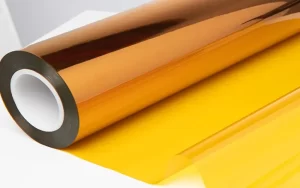
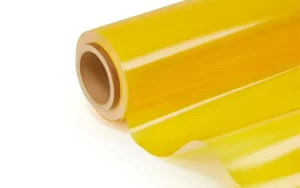
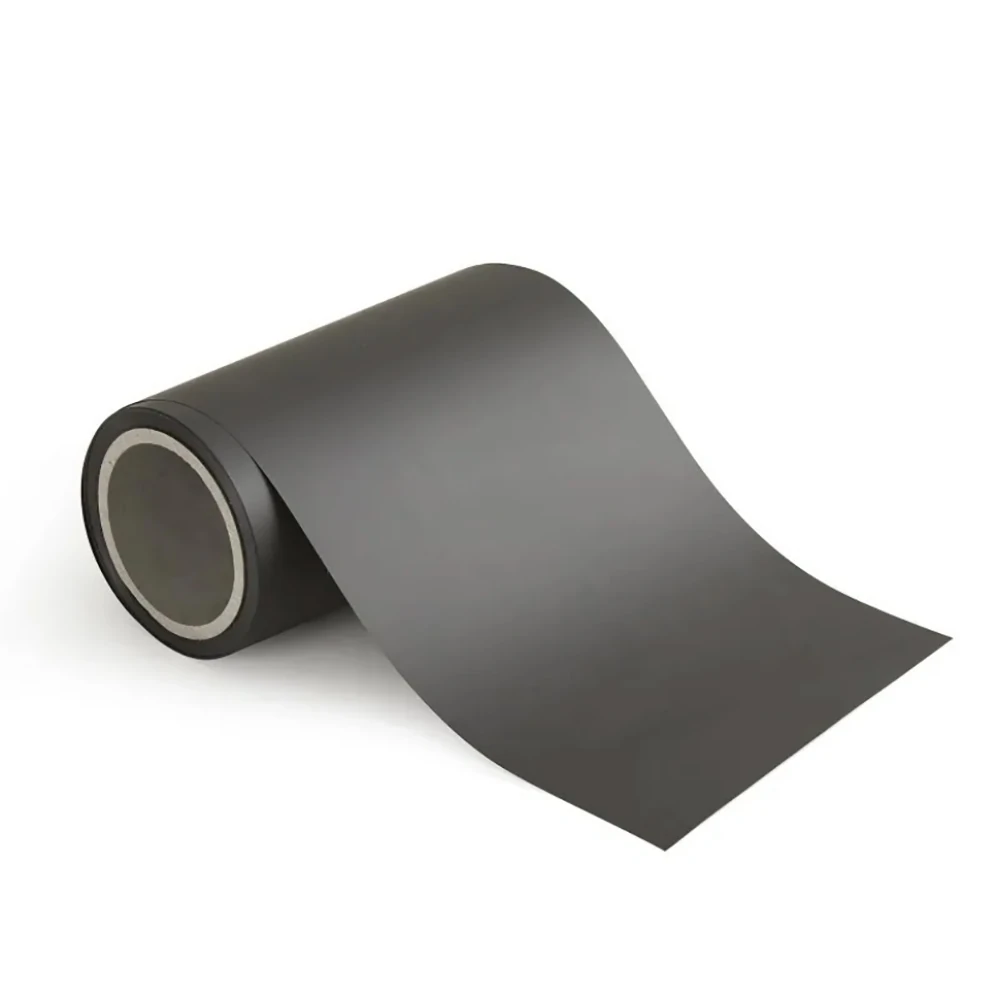
This black polyimide film is designed for flexible circuit boards where the circuit layout needs to be concealed. Unlike the translucent standard amber polyimide, black polyimide absorbs rather than reflects light, so the underlying wiring is not visible. It retains all the advantages of polyimide: excellent electrical insulation, high heat resistance, and dimensional stability.
That black color isn’t just for looks. It also makes the circuit harder to reverse-engineer and reduces glare that can confuse automated inspection cameras. Additionally, its extremely low gloss prevents glare generation, which reduces the probability of CCD misjudgment during automated optical inspection.
Why Black Polyimide Film Is Used in Flexible Circuit Applications
Excellent Electrical Insulation Performance
This black polyimide film has extremely strong electrical insulation properties. Its volume resistivity is 4.5 × 10¹³ Ω·cm, and its surface resistivity is 3 × 10¹⁵ Ω. This means that current will not leak between conductive layers, thus ensuring the reliable operation of the flexible circuit.
High Thermal Stability for Harsh Environments
The heat shrinkage rate of the black polyimide film is only 0.1%. Therefore, during high-temperature processes, such as welding, the thin film will not curl or detach from the circuit. For this reason, this heat resistant film is widely used in industries such as electronics, aerospace and automobiles.
Enhanced Circuit Shielding and Confidentiality
If your flexible circuit board needs to keep its layout confidential, a black thin film layer can effectively block its appearance. This is especially important in fields such as defense, aerospace, and high-end consumer electronics.
Low-Gloss Surface for Improved Optical Inspection
Surface gloss is 25 GU across all thicknesses—consistently low. That means less glare. And less glare means automated optical inspection systems won’t get confused by reflections. This results in fewer false rejects from CCD cameras and a higher manufacturing yield.
How to Choose the Right Black Polyimide Film Thickness
The TFB6051 series comes in four thicknesses: 18, 20, 25, and 50 μm. Which one you need depends on your application.
18μm Black Polyimide Film
At 18 μm, this is the thinnest option in the series. Thickness tolerance is ±0.5 μm. It is suited for applications where space is extremely limited, such as miniaturized flexible circuits and compact optical devices. Tensile strength is 170 MPa with 50% elongation.
20μm Black Polyimide Film
The 20-micron thickness offers greater strength than the 18-micron version. It boasts a tensile strength of 175 MPa and an elongation of 55%. Furthermore, this thickness is thin enough for high-density circuit components. It represents a good compromise: flexible enough to bend, yet strong enough to operate.
25μm Black Polyimide Film
This is a commonly selected general-purpose thickness. Tensile strength reaches 180 MPa with 60% elongation. The 25 μm film is widely used for flexible circuit cover layers, black insulating tape, and general electronic insulation where moderate mechanical protection is required.
50μm Black Polyimide Film
This TFB6051 polyimide film has a thickness of 50 micrometers, making it the thickest model in the series. Tensile strength: 185 MPa. Elongation: 65%. Choose this product when you require the highest mechanical durability and insulation thickness, such as for lithium battery connectors or high-reliability automotive electronics.
Key Properties to Consider When Selecting Black Polyimide Film
Tensile Strength and Mechanical Durability
Tensile strength increases with thickness:
- 18 μm: 170 MPa
- 20 μm: 175 MPa
- 25 μm: 180 MPa
- 50 μm: 185 MPa
The TFB6051 series has an elongation range of 50% to 65%, providing sufficient flexibility for dynamic flexing applications.
Volume and Surface Resistivity
The volume resistivity of TFB6051 black polyimide film is consistently 4.5 × 10¹³ Ω·cm. Surface resistivity is 3×10¹⁵ Ω. These values indicate excellent insulation performance, preventing current leakage and ensuring signal integrity in flexible circuits.
Dielectric Strength
The dielectric strength of TFB6051 is 110 V/μm for all thicknesses. That’s more than enough for most flexible circuit insulation needs—including power electronics and automotive systems.
Heat Shrinkage Stability
The TFB6051 high temperature polyimide film has a heat shrinkage rate of 0.1%, which is considered excellent. Many standard films range from 0.2% to 0.3%, and anything above 0.3% risks deformation or delamination during soldering.
Surface Gloss and Appearance
The entire TFB6051 series has a low gloss of just 25 GU. That low gloss gives you two advantages. First, it prevents glare from interfering with automated optical inspection. Second, it provides a non-reflective surface when light control is critical.
Common Applications of Black Polyimide Film
Flexible PCB Coverlay Films
The primary use of this product is as a cover film for flexible printed circuit boards. The black polyimide layer protects the copper conductors while providing electrical insulation and mechanical reinforcement.
Black Insulating Tapes
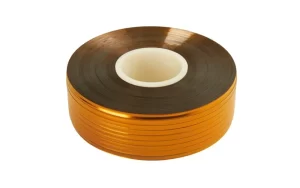
Due to its thermal stability and dielectric strength, the film is made into black insulating tape for use in coil windings, transformer insulation, and electronic assembly.
EMI Shielding and Electronic Protection
The primary function is insulation, but the black pigmentation also provides light-based shielding. And when combined with a conductive layer, it can help suppress electromagnetic interference.
Optical and Precision Electronic Devices
Its low-gloss, non-reflective surface makes it suitable for optical equipment and precision electronics, as stray light or glare can interfere with sensor performance.
How to Select the Best Black Polyimide Film for Your Application
- Determine required thickness based on insulation needs, space constraints, and mechanical demands.
- Verify electrical requirements against volume resistivity (4.5×10¹³ Ω·cm) and dielectric strength (110 V/μm).
- Assess thermal exposure — the 0.1% heat shrinkage ensures stability under soldering temperatures.
- Consider optical inspection — 25 GU gloss reduces CCD misjudgment.
- Evaluate confidentiality needs — black opacity prevents circuit pattern deciphering.
Frequently Asked Questions
What Thickness of Black Polyimide Film Should I Choose?
Please refer to the thickness guidelines above. For space-constrained designs, use a thickness of 18 or 20 μm. For general applications, choose a thickness of 25 μm. For applications requiring higher mechanical strength, choose a thickness of 50 μm.
Is Black Polyimide Film Suitable for High-Temperature Environments?
Yes. Its thermal shrinkage rate is only 0.1%, thus maintaining dimensional stability even at high temperatures. This material also retains its insulation properties in high-temperature environments such as welding or under a car hood.
Does Black Polyimide Film Provide EMI Shielding?
The primary function is electrical insulation and optical shielding. For electromagnetic interference shielding, the black polyimide film would typically be combined with a conductive layer such as copper or aluminum.
Can Black Polyimide Film Be Used in Lithium Battery Applications?
Yes. In particular, the 50-micron thickness is specifically designed for lithium-ion battery connectors, featuring high tensile strength (185 MPa) and 65% elongation.
Conclusion
Black polyimide film combines the trusted thermal and electrical properties of traditional polyimide with added advantages: circuit confidentiality, low-glare surface for optical inspection, and consistent gloss across all thicknesses. The TFB6051 series provides four thickness options (18, 20, 25, and 50 μm), each with verified tensile strength, elongation, resistivity, dielectric strength, and heat shrinkage values.
When selecting a black polyimide film, match thickness to mechanical requirements, verify electrical parameters against your design, and take advantage of the low-gloss surface to improve automated inspection yield. For applications previously using Kapton, this black polyimide series offers a viable substitute with enhanced optical and confidentiality features. If you are interested in our products, please feel free to contact us for more information and a quote.