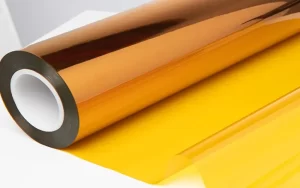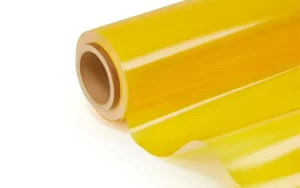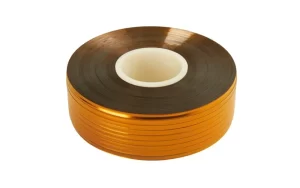
Polyimide Film for Electrical Insulation in High-Temperature Applications
1. Introduction
Whether in industrial motors or aerospace wiring, insulation failure can trigger extremely severe consequences—such as short circuits, arc flashes, or equipment damage—and in critical cases, may even lead to fires. Modern equipment is required to operate at higher power levels within confined spaces, meaning that electrical insulation film must be capable of withstanding rigorous electrical stresses and environmental conditions.
Thanks to its aromatic heterocyclic polymer structure, our F46 polyimide films can operate continuously over a wide temperature range from -269°C to 300°C, and can withstand short-term temperatures exceeding 400°C. This material is non-meltable, has an extremely low gas escape rate, and exhibits excellent resistance to radiation and most solvents. For engineers working in extreme environments, polyimide film is the proven choice.
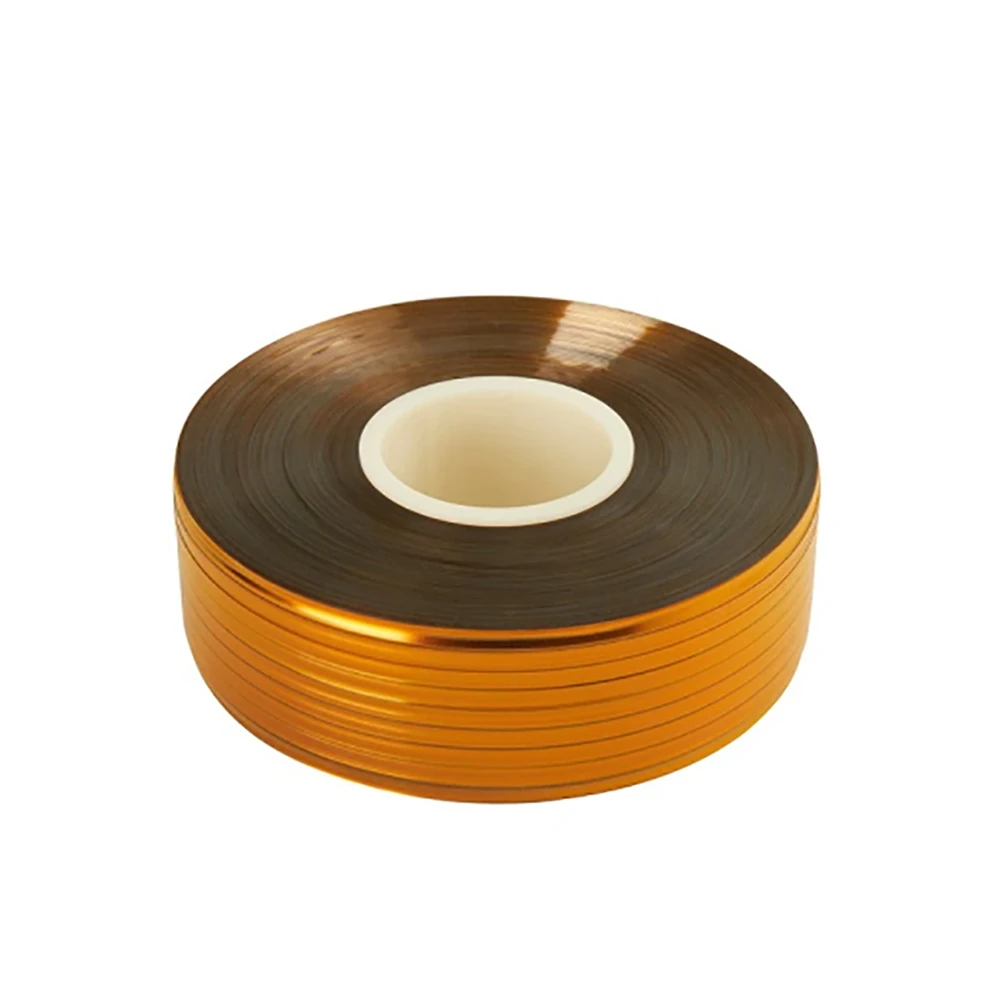
2. What Is Polyimide Film
2.1 Basic definition and material structure
Polyimide film is formed through the reaction of dianhydrides and diamines, endowing the material with exceptional thermal and mechanical stability.
2.2 Key characteristics
· No melting point (thermoset-like behavior)
· Glass transition temperature (Tg) above 300°C
· Decomposition temperature >500°C
· Excellent radiation and solvent resistance
3. Key Properties of F46 Polyimide Film
3.1 High thermal resistance
F46 Polyimide films can operate continuously at 300°C and can even withstand higher temperatures for short periods of time. After undergoing heat aging, they will neither become brittle nor deform.
3.2 Excellent dielectric strength
· Breakdown voltage: ≥150 KV/mm
· Dielectric constant at 50Hz: ≤4.0
· Loss tangent at 50Hz: ≤0.004
Its electrical properties do not change with temperature, so its insulation performance remains reliable even under extreme conditions.
3.3 Mechanical durability and flexibility
F46-grade polyimide film achieves:
· Tensile strength: ≥110 MPa
· Elongation at break: ≥55%
This high temperature polyimide film strikes a balance between strength and flexibility, allowing it to tightly wrap around objects of any shape without easily cracking or losing its insulating properties.
3.4 Chemical and moisture resistance
Uncoated polyimide itself is resistant to oil, acid and common organic solvents. When combined with an FEP coating, its moisture resistance is significantly improved, making the film suitable for humid or chemically corrosive environments.
4. Why Polyimide Film Is Ideal for High-Temperature Electrical Insulation
Polyimide films retain more than 90% of their dielectric strength and mechanical properties after being subjected to 200°C for 1000 hours. In contrast, PET or PVC films at this point have become brittle or partially degraded.
The ≥150 KV/mm breakdown strength of F46 film means that even thin gauges (e.g., 0.033mm) provide sufficient dielectric margin for most low-to-medium voltage applications. This allows engineers to reduce the number of insulation layers while maintaining safety and reliability.
4.1 Comparison with conventional insulation materials
| Material | Continuous Temp | Breakdown Strength | Flexibility | Suitable for High Heat |
| PVC | ~105°C | Moderate | Good | No |
| PET (polyester) | ~130°C | Moderate-High | Good | No |
| Polyimide | ~300°C | ≥150 KV/mm | Excellent | Yes |
5. Industrial Applications of F46 Polyimide Film
5.1 Electrical and electronic insulation systems
· Motor slot liners and phase insulation
· Transformer layer and barrier insulation
· PCB substrates and coverlay films
5.2 Aerospace components and wiring protection
· Wire and cable wrapping for aircraft
· Lightweight, flame-resistant insulation
· High-reliability systems requiring low outgassing
5.3 Automotive electrical systems
· EV/HEV high-voltage cabling
· Battery module insulation
· Onboard charger and inverter isolation
5.4 Flexible circuits and heater elements
· FPC (flexible printed circuit) base films
· Heater circuit insulation layers
· Thermal management assemblies
5.5 Tubing and heat-sealable industrial components
· Heat-shrinkable or heat-sealable tubing
· Heater circuit covers
· Heat-sealable bags and diaphragms
· Automotive manifolds and industrial bellows
6. Polyimide Film vs Other Insulation Materials
6.1 Polyimide film vs polyester film (PET)
PET is inexpensive and widely available, but its continuous operating temperature is limited to about 130°C. Polyimide has more than twice the temperature resistance of PET, making it a preferred choice for welding, reflow soldering, or high-temperature curing processes.
6.2 Polyimide film vs PTFE-based materials
PTFE has excellent dielectric properties, but it suffers from cold flow and has low mechanical strength. Polyimide retains its shape under load and can be used as both a structural layer and an insulating layer.
6.3 Advantages in high-temperature and harsh environments
· Extreme thermal stability
· High dielectric strength
· Mechanical toughness and flexibility
· Broad chemical resistance
No other commercially available film matches this combination for demanding electrical insulation applications.
7. Selection Guide for Polyimide Film
7.1 Thickness options and their applications
| Thickness | Typical Application |
| 0.033 mm | Flexible circuits, ultra-thin insulation |
| 0.038 mm | General-purpose electrical insulation |
| 0.050 mm | Motor slot liners, layer insulation |
| 0.075 mm | High-voltage, wear-resistant insulation |
7.2 Single-side vs double-side coating
· Single-side coating: One side heat-sealable; the other remains uncoated for applications where pure polyimide surface properties are required.
· Double-side coating: Both sides heat-sealable and moisture-protected; ideal for complete encapsulation and multi-layer bonding.
7.3 Key factors for material selection in engineering projects
· Maximum continuous operating temperature
· Need for heat sealing or adhesive-free bonding
· Required dielectric strength (use thinner film for low-voltage, thicker for high-voltage)
· Environmental conditions (humidity, chemicals, UV exposure)
8. Conclusion
Polyimide film combines exceptional high-temperature resistance, high dielectric strength, mechanical durability, and chemical inertness. When enhanced with an FEP coating, this film acquires the additional benefits of heat-sealability and superior moisture resistance. For engineers working in the transportation, aerospace, energy, or industrial automation sectors, polyimide film is often the only material capable of simultaneously meeting all technical specifications. As the industry evolves toward thinner films with higher thermal conductivity and specialized functional coatings, FEP-coated polyimide (Grade F46) stands out as a viable, commercially proven, and mature solution—seamlessly integrating the time-tested excellence of polyimide with the manufacturing advantages conferred by heat-sealing and moisture-proofing capabilities. If you are interested in Grade F46, please feel free to contact us to request a quote.