How Is FEP Coated Polyimide Film Used in Automotive Diaphragms and Manifolds?
Automotive engineering pushes materials to their limits. Under the hood, components must survive temperatures that would destroy ordinary plastics, resist exposure to fuels, oils, and coolants, and keep working reliably for the entire life of the vehicle. Among the films that meet these demands, high temperature polyimide film has become a core material — and when it is coated with FEP fluoropolymer, it gains capabilities that make it especially valuable for parts like automotive diaphragms and manifolds.
This article explains what polyimide film is, what FEP coating adds, and how the combination is used in diaphragm and manifold applications.
What Is Polyimide Film?
Polyimide is a family of high-performance polymers characterized by an imide ring in its molecular backbone. When formed into a thin sheet, it becomes high temperature resistant film with a set of properties that few other plastics can match.
The most important of these polyimide film properties include:
- Outstanding thermal stability. Polyimide film can operate continuously at elevated temperatures and withstand short-term exposure far beyond what polyester or polyethylene films tolerate.
- Broad temperature range. It performs reliably across both high heat and deep cold, making it suitable for environments that cycle through extremes.
- Excellent electrical insulation. Its high dielectric strength makes it a trusted insulation layer in motors, transformers, and electronic assemblies.
- Strong mechanical integrity. The film offers high tensile strength and elongation, so it resists tearing and deformation during handling and use.
- Chemical resistance. Polyimide film resists many solvents, oils, and chemicals, which is why it is widely used in industrial and transportation settings.
These characteristics explain why polyimide film has become the default choice for flexible printed circuits, motor slot liners, and other demanding insulation applications. But the base film has a limitation: by itself, it cannot be easily heat-sealed or bonded to itself or other surfaces. This is where FEP coating becomes important.
What Does FEP Coating Add?
FEP, or fluorinated ethylene propylene, is a fluoropolymer related to PTFE. When a layer of FEP is applied to one or both sides of a polyimide film, the result is a composite material that combines the strength of polyimide with the sealing and barrier qualities of FEP.
The FEP layer contributes several functions:
- Heat sealability. FEP can be melted and bonded under heat and pressure, allowing the coated film to form a durable, tight seal. This is the key property that uncoated polyimide film lacks.
- Moisture resistance. FEP acts as a barrier that limits the passage of moisture and other fluids.
- Enhanced chemical resistance. The fluoropolymer surface resists aggressive chemicals and solvents, protecting the underlying film and the component it covers.
- Strong bonding. The FEP coating adheres firmly to the polyimide substrate and bonds reliably to mating surfaces during sealing.
In short, coating polyimide with FEP turns a high-performance insulation film into a heat-bondable, moisture-resistant material that can be formed into sealed structures. This combination is precisely what certain automotive components require.
Why These Properties Matter in Automotive Applications
Automotive components face a unique combination of stresses. Engine compartments are hot, sometimes reaching temperatures that soften conventional plastics. At the same time, parts come into contact with fuels, lubricants, coolants, and cleaning agents. They must also cope with vibration, pressure changes, and long service life expectations.
A material used in this environment needs to:
- Withstand sustained heat without degrading or losing strength.
- Resist chemical attack from the fluids it encounters.
- Provide reliable electrical insulation where required.
- Hold up mechanically through repeated thermal and pressure cycles.
- Seal effectively so that fluids and gases do not leak through the component.
High temperature polyimide film satisfies the first four requirements exceptionally well, and the FEP coating supplies the fifth. This is why FEP-coated polyimide film appears in both diaphragms and manifolds.
Applications in Automotive Diaphragms
A diaphragm is a flexible membrane that separates two regions and responds to pressure differences. In automotive systems, diaphragms appear in fuel pumps, pressure regulators, valve actuators, and various sensor assemblies. A diaphragm must be flexible enough to deflect repeatedly, yet strong and impermeable enough to maintain a reliable seal over millions of cycles.
FEP-coated polyimide film is well suited to this role. The polyimide base provides the mechanical strength and temperature resistance that let the diaphragm survive hot, chemically active environments. The FEP coating adds the sealing and barrier qualities needed to keep fuel or air from passing through. Because the film can be heat-sealed, manufacturers can bond it to housings or form multi-layer structures that hold up under pressure.
For a fuel system, this matters in several practical ways. The diaphragm resists swelling and degradation when exposed to fuel, maintains its flexibility across the engine’s operating temperature range, and keeps its seal over the component’s full service life. These factors contribute directly to reliable fuel delivery and lower failure rates.
Applications in Automotive Manifolds
A manifold distributes or collects fluids and gases — think of intake manifolds that channel air to the cylinders, or exhaust-related components that must tolerate high heat. While manifolds themselves are often made of metal or rigid plastics, flexible films and gasketing materials play a supporting but critical role at sealing surfaces and in diaphragm-type components built into the manifold system.
FEP-coated polyimide film is used where a thin, strong, heat-resistant layer is needed to create a reliable seal or to insulate a section of the manifold assembly. The FEP coating allows the film to be heat-sealed into position, forming a bond that withstands the pressures and temperatures inside the manifold. At the same time, the film’s chemical resistance protects it from fuel vapors and other gases that flow through the system.
This combination of heat sealability and chemical inertness is what makes the material practical in manifold-related sealing and insulation applications. It can be formed into the required shape and then sealed, creating a leak-resistant barrier without the bulk of metal or rigid plastic.
F46: A Heat-Sealable FEP-Coated Polyimide Film
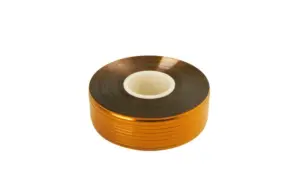
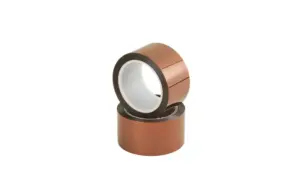
For applications that need the combination of heat sealability, moisture resistance, and chemical resistance described above, F46 is a general-purpose polyimide film coated or laminated on one or both sides with FEP fluoropolymer.
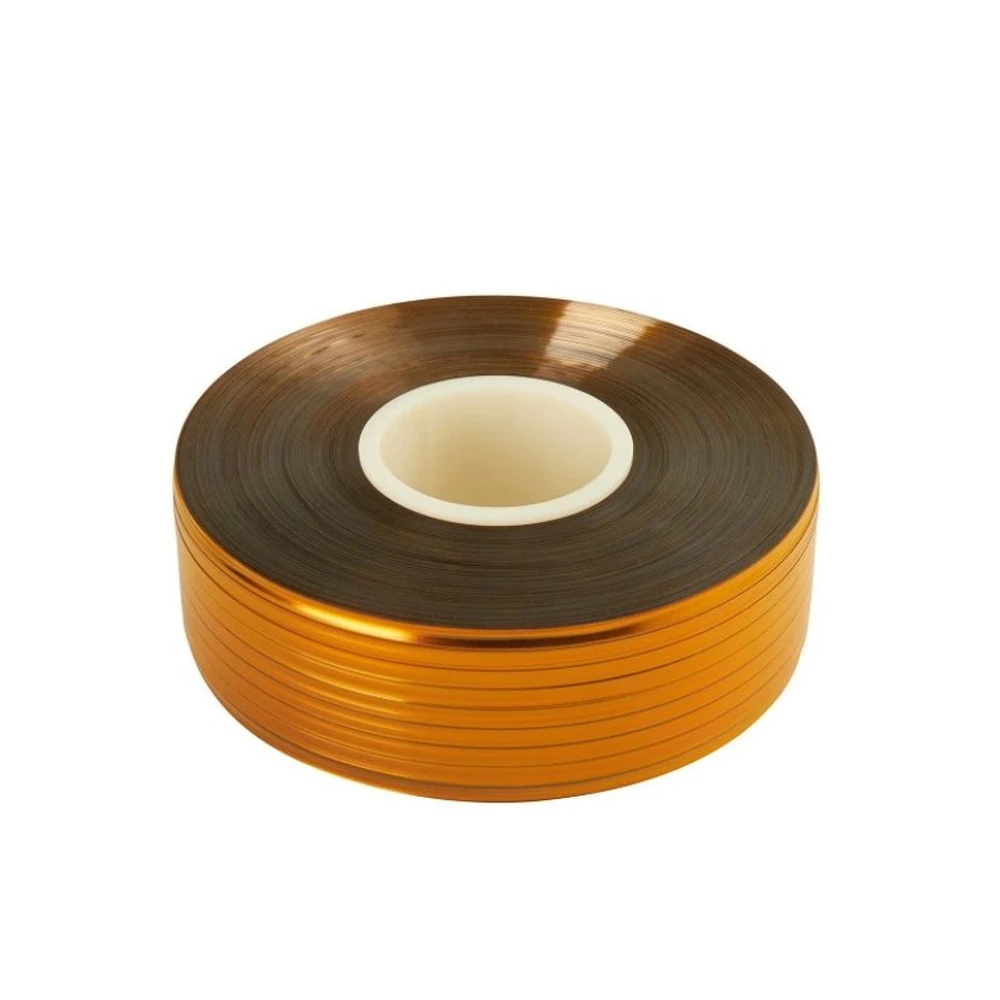
The key advantage of F46 is that it provides heat sealability, moisture resistance, and enhanced chemical resistance — capabilities that go beyond what uncoated polyimide films can offer. This makes it suitable for applications that require a heat-bondable film or superior moisture and chemical resistance, including automotive diaphragms and manifolds, tubing, heater circuits, heat-sealable bags, and electrical insulation.
F46 is available in both single-sided and double-sided FEP coating, across a range of total thicknesses from 0.033 mm to 0.075 mm, so it can be matched to the specific design needs of a component.
Typical properties of F46 include:
- Tensile strength: ≥110 MPa
- Elongation: ≥55%
- Stripping strength: ≥8 N/25mm
- Breakdown strength: ≥150 kV/mm
- Dielectric constant at 50 Hz: ≤4.0
- Loss tangent at 50 Hz: ≤0.004
For engineers specifying a high temperature polyimide film for automotive diaphragms, manifolds, or related sealing and insulation applications, F46 provides the FEP-coated capability needed to achieve reliable heat sealing, moisture protection, and chemical resistance.
A Polyimide Film Supplier With Production Depth
When selecting a polyimide film supplier, buyers should consider its production capacity, product consistency, and ability to maintain a reliable supply. F46 is manufactured by Tianjin Fortune International Industry and Trade Co., Ltd., established in 2000 and one of the early polyimide film manufacturers in China’s electrical insulation industry since it began producing polyimide film in 2004.
This production depth translates directly into quality and supply stability. The 86,000-square-meter Tianjin factory runs 6 production lines with an annual capacity of 280 tons, producing polyimide films in thicknesses from 0.015 mm to 0.25 mm — among the few domestic manufacturers able to supply a full thickness range. Its polyimide products have replaced DuPont products in some industries and are exported to markets including South Korea, Singapore, Austria, the United States, Russia, India, Italy, Japan, and Thailand.
Conclusion
High temperature polyimide film has earned its place in automotive engineering through exceptional heat resistance, mechanical strength, and electrical insulation. Coating that film with FEP adds heat sealability, moisture resistance, and enhanced chemical resistance, extending its usefulness to sealed, heat-bonded components.
Automotive diaphragms and manifolds are a natural fit for this material. They demand a film that stays strong and flexible at high temperatures, resists fuels and chemicals, seals reliably, and lasts for the life of the vehicle. FEP-coated polyimide film delivers on all of these points, with the FEP layer providing the sealing capability and the polyimide base providing the structural and thermal backbone.
For buyers and engineers, selecting a dependable polyimide film supplier with consistent, well-documented material is the practical step that turns these material advantages into reliable, production-ready components. Contact our team to discuss your polyimide film requirements and learn how F46 can meet the needs of your automotive applications.
Frequently Asked Questions
1. What are the main benefits of FEP-coated polyimide film?
FEP-coated polyimide film combines the heat resistance and mechanical strength of polyimide with the heat sealability, moisture resistance, and enhanced chemical resistance of FEP.
2. Why is FEP-coated polyimide film used in automotive diaphragms?
It provides the flexibility and mechanical strength needed for repeated movement, while the FEP coating helps create a reliable seal and resist exposure to fuels and other fluids.
3. What thicknesses are available for F46 polyimide film?
F46 is available in total thicknesses from 0.033 mm to 0.075 mm, with single-sided or double-sided FEP coating to suit different application requirements.