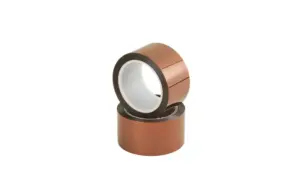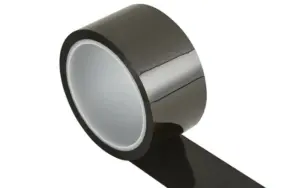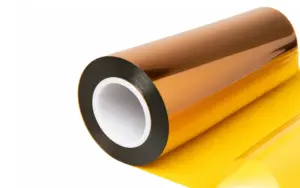
Polyimide Rubber Tape for Electrolyte-Resistant Battery Applications
1. Why Battery Cells Need Smarter Insulation and Protection
Battery technology has advanced rapidly over the past decade. Today, lithium-ion batteries are widely used in electric vehicles, energy storage systems, consumer electronics, and medical devices. As battery designs change, the materials used inside cells play an important role in their performance and safety.
Each battery cell contains layers of electrodes, separators, and current collectors, which are sealed inside a steel or aluminum shell, pouch, or polymer housing. If these materials fail, they can cause insulation problems, short circuits, or safety risks.
Battery tapes help prevent these issues by providing insulation, bonding, and protection. They must maintain these functions under high temperatures and prolonged contact with chemicals.
2. The Environment a Battery Tape Must Endure
To appreciate why material choice matters, it helps to look at what the inside of a cell actually puts a tape through.
Heat. Cells generate heat during charging and discharging. Depending on the application and cell design, internal temperatures can rise substantially and cycle repeatedly. A tape that softens, shrinks, or loses adhesion at elevated temperature is a tape that fails early.
Chemical exposure. The electrolyte inside a lithium cell is not inert. It is a reactive, often solvent-rich medium that can swell, dissolve, or degrade ordinary adhesives and films. A tape that absorbs electrolyte can lose its dimensional stability and its bond strength.
Electrical stress. Insulation is a primary function. A tape that conducts, breaks down, or carbonizes under electrical load can create a short-circuit path — exactly the failure it was meant to prevent.
Mechanical stress. Cells are wound, stacked, pressed, and cycled. Tapes must hold electrodes in place without slipping, lifting, or peeling under repeated thermal and mechanical load.
Time. A battery tape is not tested over hours. It must hold up over hundreds or thousands of cycles, and often over years of calendar life. Degradation is a slow, cumulative process.
These five stresses — heat, chemicals, electrical load, mechanical force, and time — define the bar that any serious battery-grade tape must clear.
3. The Polyimide Difference
Not all films are equal. Polyimide stands out because it combines several properties that are individually hard to find and rarely found together.
Polyimide film is known first and foremost for its thermal stability. It can withstand high temperatures without melting, shrinking, or degrading, which is why it has long been a workhorse in demanding electronics and aerospace applications.
Polyimide also offers strong electrical insulation performance. Its dielectric properties make it a dependable barrier against unwanted current paths, which is essential when electrodes and current collectors are packed closely together.
Beyond heat and electrical performance, polyimide brings dimensional stability and mechanical toughness. It resists tearing and maintains its shape, so it can be applied precisely and hold its position reliably.
When a pressure-sensitive adhesive is paired with this film, the result is a tape that can be applied cleanly, bond firmly, and — critically — maintain that bond under conditions that would defeat ordinary tapes. This combination of a high-performance film and a high-performance adhesive is the foundation of what is often called a polyimide film adhesive tape or a polyimide tape more broadly.
4. What Polyimide Tape Is Used For
Because polyimide tape brings together heat resistance, adhesion, and electrical insulation, its range of uses is broad. Understanding these uses helps clarify where it fits in electronics and automotive manufacturing.
Coil wrapping. Motor and transformer windings need insulation that survives both heat and mechanical stress. A polyimide heat resistant tape wraps coils cleanly and holds them secure through thermal cycling.
Motor insulation. In motors and generators, insulation must endure operating heat while resisting electrical breakdown. Polyimide tape provides a thin, tough insulating layer.
Wave soldering masking. During PCB assembly, certain areas must be shielded from solder. Polyimide tape masks these areas cleanly because it withstands the soldering temperature and removes without leaving adhesive residue.
High-temperature bonding. Wherever components must be joined or held at elevated temperature, polyimide tape offers a reliable bond that does not degrade quickly under heat.
These established polyimide tape uses all flow from the same core properties. And those same properties point toward an increasingly important application: the battery cell.
5. The Battery Problem That Ordinary Tapes Cannot Solve
Lithium battery cells present a challenge that older, general-purpose tapes were never designed to handle: long-term exposure to electrolyte.
Inside a cell, the adhesive layer of a tape is in direct or near-direct contact with the electrolyte. Over repeated charge-discharge cycles, several failure modes can appear.
The first is swelling. An adhesive that absorbs electrolyte swells and softens, losing its grip and its dimensional integrity.
The second is precipitation. Components of the adhesive can leach out or react, depositing unwanted material inside the cell. This precipitation can foul the cell chemistry and degrade performance.
The third, and often the most visible, is carbonization. Under repeated electrical and thermal cycling, a degraded adhesive can carbonize and turn black. This is not merely a cosmetic problem — carbonized material can conduct electricity, and a conductive path inside a cell is a direct route to a short circuit.
These failures compound. Swelling and precipitation reduce battery life. Carbonization and the short circuits it can trigger are a serious safety concern. The result is the very outcome a battery tape is supposed to prevent: shortened life and increased risk.
6. Fortune Polyimide Rubber Tape: Solving the Electrolyte Problem
These failure modes are exactly what Fortune polyimide rubber tape was engineered to address. The tape starts with polyimide film as its base film, giving it the thermal stability to stay dimensionally stable and intact under high temperatures. Paired with that substrate is a high-performance pressure-sensitive adhesive, formulated not just to bond but to remain stable in contact with electrolyte — resisting swelling, resisting precipitation, and keeping the adhesive layer in a stable state over time.
That combination produces a tape with excellent heat resistance, strong adhesion, and reliable electrical insulation, making it a dependable polyimide electrical insulation tape for demanding cell designs.
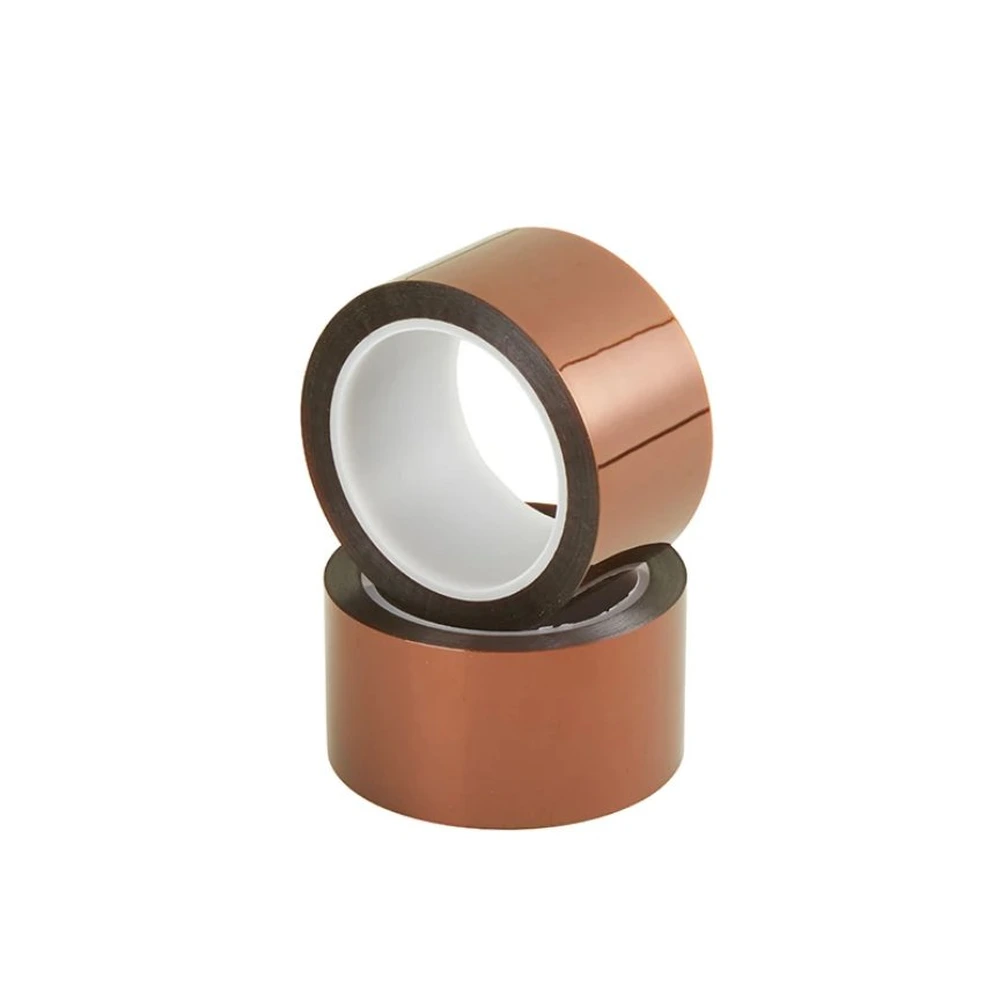
Its performance in the electrolyte environment is what sets it apart, and the results are measurable:
| Property | Performance |
| Temperature resistance | Peels off and adheres well to the substrate after 100 °C for 4 hours |
| Swelling resistance | Good, in electrolyte |
| Precipitation resistance | Good, in electrolyte |
| Adhesive layer state | Stable |
| Peeling force | Stable |
| Long-term electrolyte immersion | Electrode adheres stably after 85 °C / 50 days |
| Electrochemical cycling voltage | Stable |
| Blackening after cycling | Solved |
These results translate directly to the outcomes that matter most. Even after soaking in electrolyte at 85 °C for 50 days, the electrode still adheres stably and the cycling voltage remains stable. By preventing the carbonization and precipitation that plague ordinary tapes, this polyimide tape effectively solves the reduced battery life and short-circuit risks those failures cause.
The tape is suitable for the adhesive protection of electrode plate parts across a wide range of cell formats, including steel shell, aluminum shell, pouch, and polymer battery cells. That breadth means manufacturers can rely on one proven material across multiple designs.
7. Conclusion
Selecting an insulation and protection tape for a battery cell is not a commodity decision. It is an engineering decision with direct consequences for cell life and safety.
The right tape must resist heat without degrading, maintain adhesion through sustained thermal exposure, and keep its adhesive stable in electrolyte — resisting swelling, precipitation, and carbonization. Fortune polyimide rubber tape meets these criteria with a polyimide film substrate, a high-performance pressure-sensitive adhesive, and proven long-term stability in the electrolyte environment.
In an industry where reliability and safety are non-negotiable, the quality of the tape is quietly one of the most consequential choices in the cell. Fortune polyimide rubber tape gives battery manufacturers a material they can depend on — across steel shell, aluminum shell, pouch, and polymer cell designs — to protect electrodes and extend the safe, reliable life of the cell. Looking for polyimide rubber tape for battery applications? Contact Fortune to discuss your requirements and find a suitable tape solution for your cell design.
FAQ
Q1: What makes Fortune polyimide rubber tape suitable for battery cells?
Its polyimide film base and high-performance pressure-sensitive adhesive resist swelling, precipitation, and carbonization in electrolyte, keeping the electrode stable and bonded even after long-term immersion.
Q2: How long can the tape withstand electrolyte exposure?
Even after soaking in electrolyte at 85 °C for 50 days, the electrode still adheres stably and the electrochemical cycling voltage remains stable.
Q3: Which cell types is the tape compatible with?
It is suitable for the adhesive protection of electrode plate parts in steel shell, aluminum shell, pouch, and polymer battery cells.